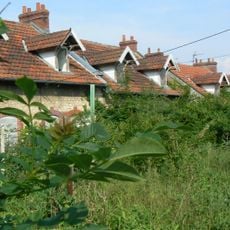
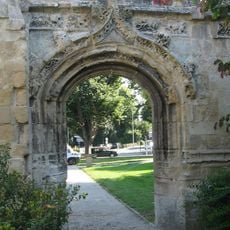
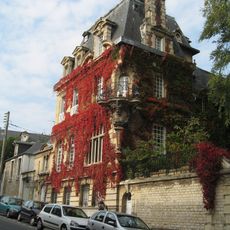
Jardin botanique de Caen, Botanical garden in Caen, France.
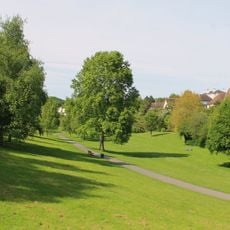
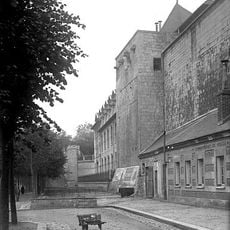
The Jardin des plantes de Caen occupies a sloping former stone quarry with 18 m of elevation change, bought by the university on 25 September 1736. Its lower section holds native Norman plants, a medicinal garden, rockeries, an arboretum and a greenhouse of exotic species; the upper section is a public park with trees such as a Sophora japonica planted in 1750.
The garden was founded in the 18th century as an educational space for medicine and pharmacy students. Over time it evolved from a university facility into a public space accessible to everyone.
The garden keeps the name of the place Blot, after Noël-Sébastien Blot, head of cultivation who prepared the sloping former stone quarry from 1737 and later held the botany chair. In spring the gardeners give ladybug and lacewing eggs to local gardeners to encourage biological pest control instead of pesticides.
The main entrance is on place Blot, with secondary entrances at 37 rue du XXe siècle to the south and rue François-Marescot to the north; the western path off allée de Passeroses is closed. The sloping ground drops 18 m, so expect uneven paths between the lower collections and the upper park. The garden is open daily.
The garden runs a practical program that helps visitors manage pests naturally in their own gardens through biological control methods. This hands-on approach connects the garden's expertise directly with visitors' daily gardening needs.
The community of curious travelers
AroundUs brings together thousands of curated places, local tips, and hidden gems, enriched daily by 94,657 contributors worldwide.