Roque Saint-Christophe Site, Archaeological site and fortress in Dordogne, France
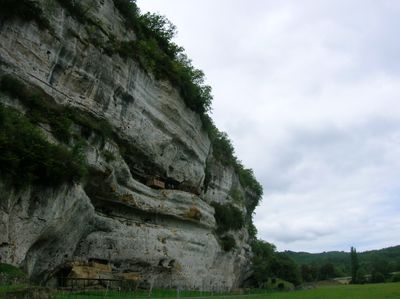
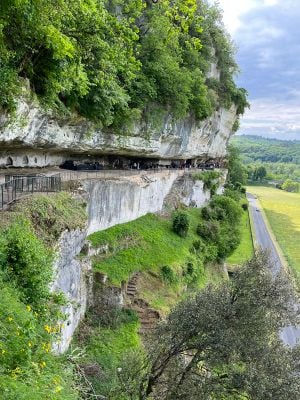
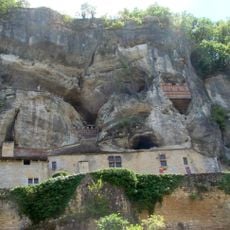
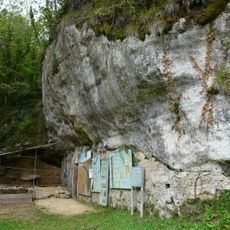
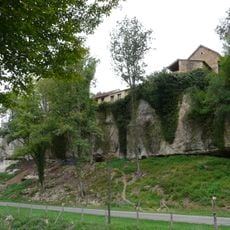
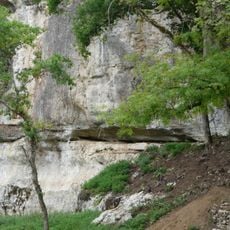
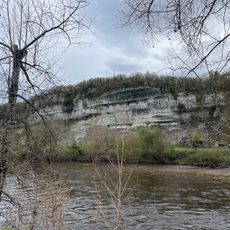
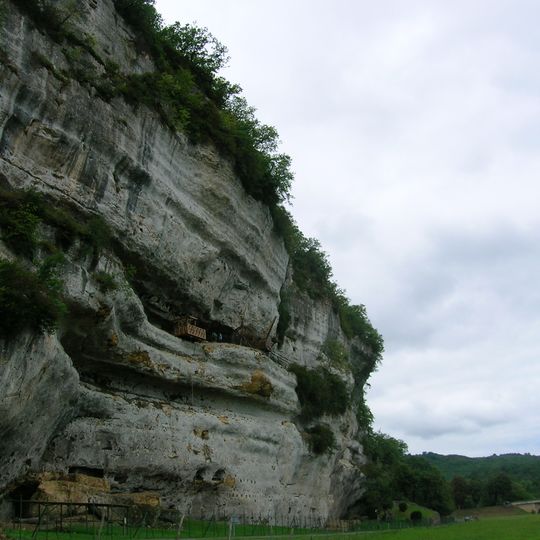
La Roque Saint-Christophe is a limestone cliff formation housing caves and fortifications along the Vézère River in Dordogne. The site stretches roughly 1 km along the riverbank with multiple levels reaching up to 80 meters in height.
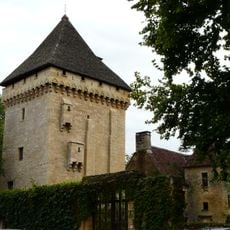
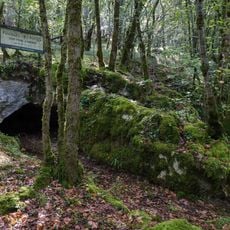
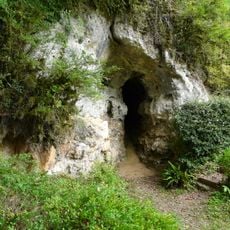
Natural cavities here sheltered humans from the Upper Palaeolithic to the Iron Age, then served as troglodytic housing and refuge from the Middle Ages to the Renaissance, notably against Viking raids and during the Hundred Years War. Bishop Frotaire of Périgueux had a fortress built in 976 to protect the local population from Norman invasions. The dwellings, used as a Huguenot refuge, were destroyed in 1588 during the Wars of Religion.
The site's name comes from a rock dedicated to Saint Christopher, and its five terraces were shaped by river erosion and frost. Visitors today follow a reconstructed medieval building site, a forge, a drum-lier, a quarry, a weapon hall and a kitchen, and a dwelling with a kitchen from around the year 1000.
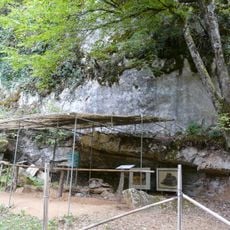
Visitors can explore the caves with guided tours and view films about geological formation. The different levels are partially accessible on foot, though conditions and access depend on weather and which areas are currently open.
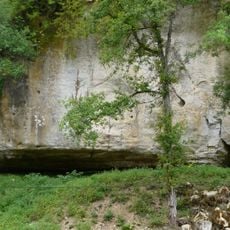
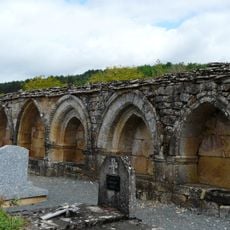
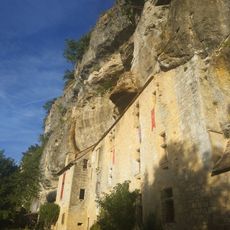
The cliff walls are drilled with artificial holes of different periods, cut to hold the timber beams of successive dwellings built against the rock. Visitors can still see these sockets, which mark where houses were anchored over the centuries.
The community of curious travelers
AroundUs brings together thousands of curated places, local tips, and hidden gems, enriched daily by 93,464 contributors worldwide.