Mont Beuvray, Mountain peak in Nièvre, France
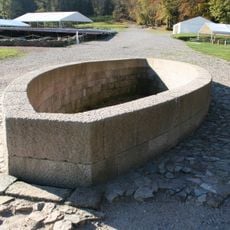
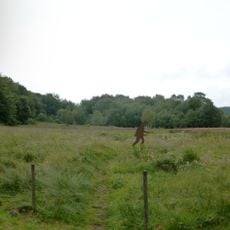
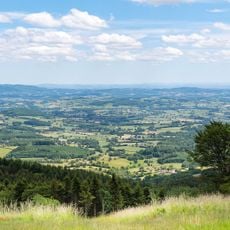
Mont Beuvray is a rounded, densely wooded mountain in the Morvan massif, rising to 821 metres on the border of Nièvre and Saône-et-Loire. Its summit is a flat, open grassland, while the slopes are covered with trees and clearings around the archaeological digs. The site preserves the remains of the Gallic oppidum of Bibracte, including the murus gallicus of the Rebout gate and the bases of buildings at La Côme Chaudron and Pâture du Couvent.
Mont Beuvray's summit was the Gaulish oppidum of Bibracte, capital of the Aedui and an ally of Rome. In 52 BCE Vercingetorix was proclaimed leader of the united Gauls there. After his victory at Alesia, Caesar spent the winter at Bibracte writing his Commentaries on the Gallic War. Excavations begun by Jacques-Gabriel Bulliot in 1867 uncovered the site.
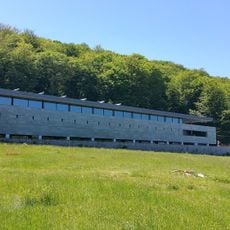
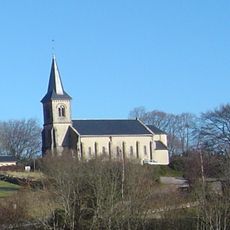
The Musée de la civilisation celtique, opened on the mountain's slopes in 1996, presents the Gallic oppidum of Bibracte. The summit chapel of Saint-Martin, built in 1873, stands over the apse of a 10th-century Romanesque chapel, itself preceded by an early Christian building and an ancient temple. A calvary known as the croix de saint Martin carries a bas-relief of the Charity of Saint Martin.
Well-marked hiking trails allow exploration throughout the year, with facilities including picnic areas, parking, and restrooms available on-site. Sturdy footwear is recommended, and bringing water is essential, especially for longer walks up the hillside.
The 570 lithic pieces were not found on the mountain itself but in the ancient necropolis of Col du Rebout, at its northeastern foot. They include quartz, fluorite and thirteen flint types, two of them from the Paris Basin: Meusnes and Grand-Pressigny.
The community of curious travelers
AroundUs brings together thousands of curated places, local tips, and hidden gems, enriched daily by 95,341 contributors worldwide.