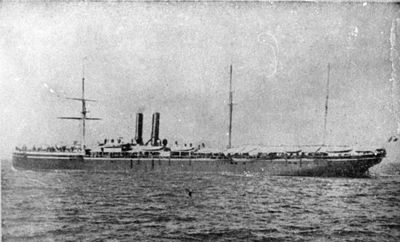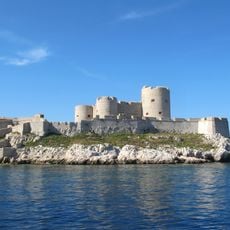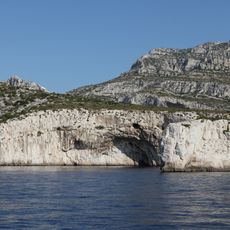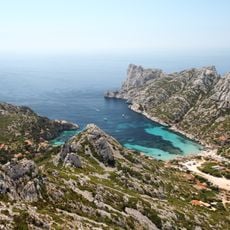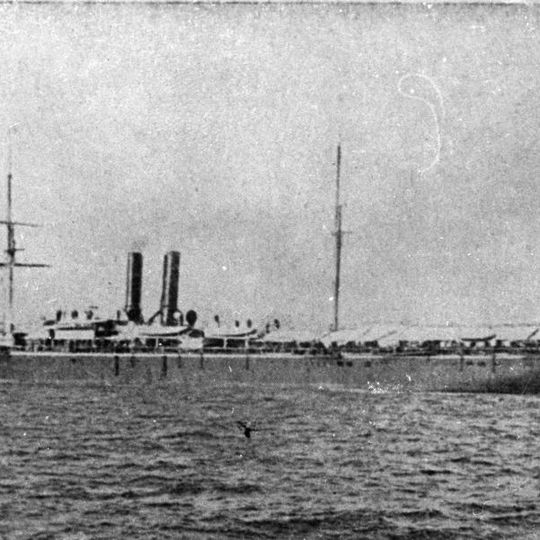
Natal, Steam-powered vessel in Marseille, France.
The Natal was a French mail steamer of the Compagnie des Messageries Maritimes, launched at La Ciotat on 3 July 1881 to plans by engineer M. Vésigné. It measured 130.75 m long and 12.07 m wide, with a 6.3 m draft and 6,150 t displacement. It was a propeller steamer rigged as a three-masted barque with two funnels, driven by a compound engine fed by eight coal-fired boilers. It sank in 1917 and lies at 127 m off the Planier lighthouse.
Built at La Ciotat to plans by engineer M. Vésigné, the Natal was launched on 3 July 1881 as the lead ship of seven ordered after an 1881 convention between the French state and the Compagnie des Messageries Maritimes. It entered service on 5 February 1882 and inaugurated the first regular Marseille–Nouméa mail route via the Suez Canal on 23 November 1882. It was converted into an auxiliary troop transport during the Boxer Rebellion in 1900 and again in World War I, and sank on 30 August 1917 after colliding with the cargo ship Malgache in the roadstead of Marseille.
The name Natal refers to the South African colony, following the line's practice of naming sister ships after distant destinations. The ship carried 90 first-, 44 second- and 77 third-class passengers, plus a crew of 196, and its 1882 Marseille–Nouméa route ran through the Suez Canal. The wreck lies at 127 m off the Planier lighthouse and is not accessible to visitors.
The wreck lies at a depth of 127 metres off the Planier lighthouse, outside the rade of Marseille, and is not accessible to visitors; it was located in July 1978 by a team of Commander Cousteau and revisited on 20 July 2019 by the Planète Méditerranée expedition. The site can only be reached by deep-diving professionals working with the DRASSM.
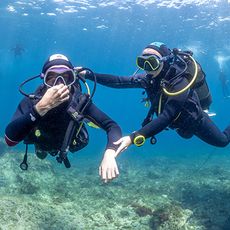
The wreck lies at a depth of 127 metres off the Planier lighthouse, near Marseille. A team led by Commander Cousteau located it in July 1978 during an oceanographic campaign, but the film planned about the discovery was never made. On 20 July 2019, four divers of the Planète Méditerranée expedition, including Laurent Ballesta, spotted it again during an audit of the Mediterranean's deep seabed for the DRASSM.
The community of curious travelers
AroundUs brings together thousands of curated places, local tips, and hidden gems, enriched daily by 94,657 contributors worldwide.