Pech Merle cave, Prehistoric cave art site in Cabrerets, France
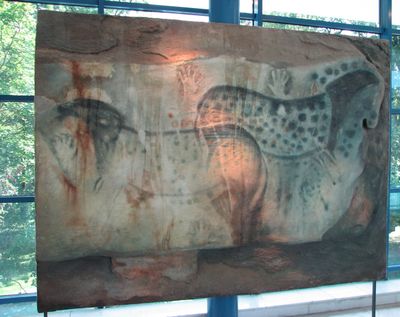
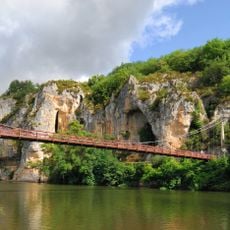
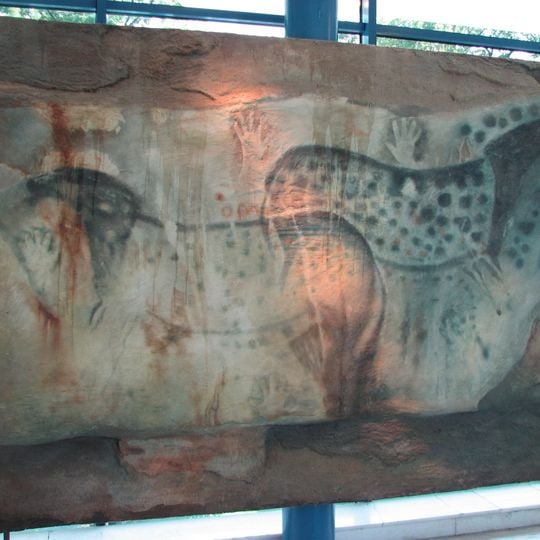
Pech Merle cave runs through two levels of galleries about 100 metres above the Sagne and Célé rivers, with passages roughly 10 metres wide and vaults 5 to 10 metres high. Visitors follow 1,200 metres of the 2-kilometre system. The walls carry 700 painted or engraved motifs, among them 25 mammoths, 13 bison, 9 horses and 595 abstract signs, plus hand stencils such as the spotted horse panel with its dark animal bodies, red hand marks and pale handprints.
The cave was known to locals, but its deepest painted chambers were discovered in 1922 by young explorers. This find opened up one of humanity's oldest artistic creations to the wider world.
The cave holds 700 painted or engraved motifs: 69 animal figures, 13 human or near-human figures and 595 abstract signs. Among the animals are 25 mammoths, 13 bison, 9 horses, 7 aurochs and 5 imaginary creatures. The name pech is Occitan for a hill, and the cave opens in one above the Sagne and Célé valleys.
Reserve tickets ahead of time since daily visitor numbers are limited to protect the artworks. Tours last about an hour and pass through narrow spaces, so comfortable shoes are helpful.
Twelve footprints of an adolescent were fossilised by calcification in the dried bed of a gour, or rimstone pool, deep inside the cave. Three flint tools, a burin, a blade and a pebble, along with charcoal and fragments of reindeer shoulder blade, were found nearby. Michel Lorblanchet concluded that the cave was not used as a dwelling but visited only occasionally.
The community of curious travelers
AroundUs brings together thousands of curated places, local tips, and hidden gems, enriched daily by 93,782 contributors worldwide.