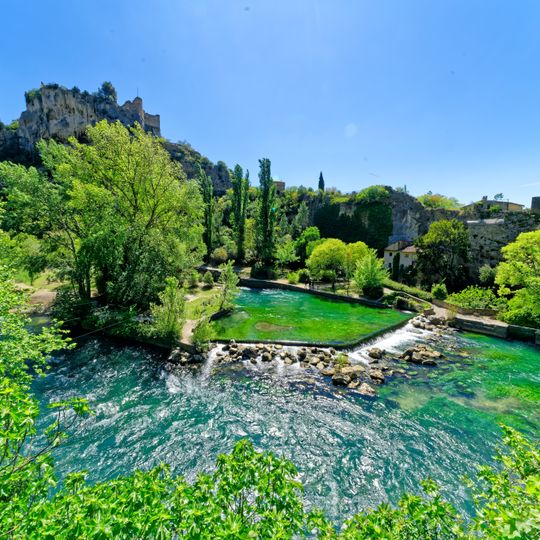
Fontaine de Vaucluse, Karst spring in Fontaine-de-Vaucluse, France
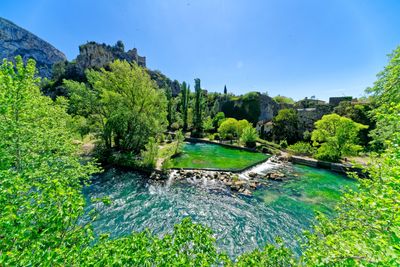
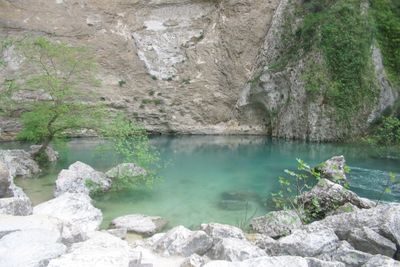
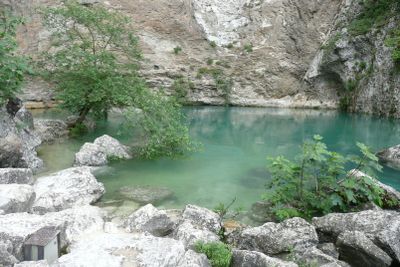
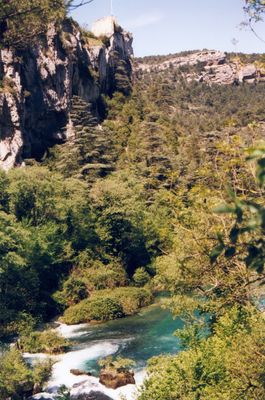
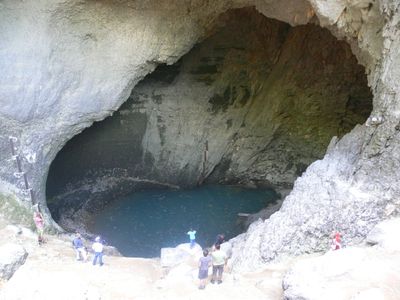
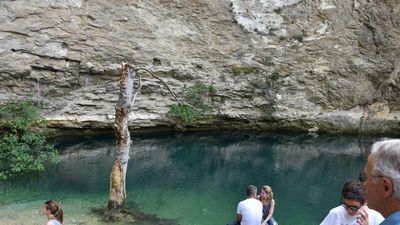
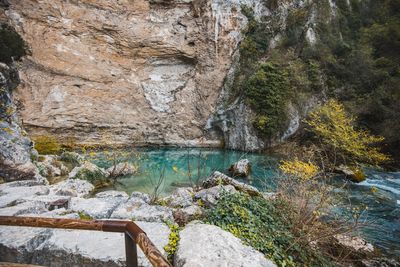
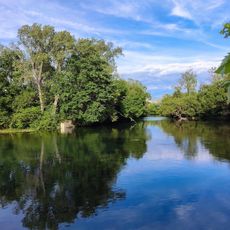
The Fontaine de Vaucluse is a karst spring that emerges from a limestone cliff face, forming a deep blue pool where the River Sorgue begins its flow. The water rises from an opening in the rock and spreads across a natural basin surrounded by towering stone walls.
The spring was first documented in the 17th century and has long attracted explorers seeking to understand its deepest secrets. These exploration efforts pushed people to develop new diving techniques and equipment to investigate what lay below.
The name Fontaine de Vaucluse comes from Latin words meaning "closed valley," a name that still shapes how people see this place. Visitors can watch how the bright blue water draws people to its edges, creating a gathering spot where locals and travelers pause to take in the natural force.
The site is easily reached on foot, with paths leading directly to the pool where you can see the water close up. The best time to visit is after heavy rain, when the water volume is most visible and the pool appears more intensely blue.
Excavations revealed thousands of coins and objects left in the water, showing that people have made offerings here since ancient times. This discovery suggests the site has held spiritual importance for people across many centuries.
The community of curious travelers
AroundUs brings together thousands of curated places, local tips, and hidden gems, enriched daily by 92,634 contributors worldwide.