Paddaghju, Archaeological site in Sartène, France
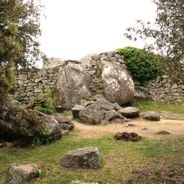
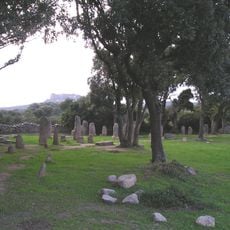
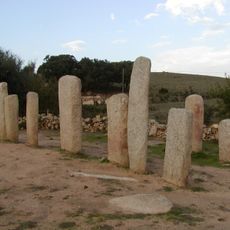
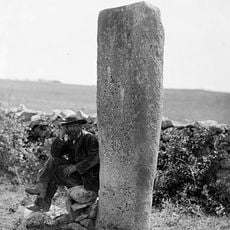
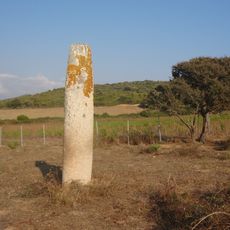
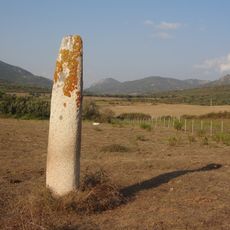
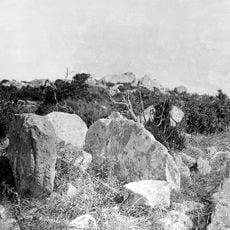
Paddaghju is a prehistoric site in Sartène with 258 menhirs, the largest concentration of its kind in the Mediterranean basin. The stones are grouped into seven rows, six oriented north-south and one east-west. Most are roughly shaped into human silhouettes, and three statue-menhirs carry carvings of swords and daggers.
The site originates from prehistoric times and was recorded by researchers in the 1800s who noted the arrangement of the stones. Systematic work in the mid-1900s uncovered more details about how the carved figures were made and their original positions.
The name Palaghju comes from the Corsican word for straw, paglia, after the dry grass that covers the site. The cup marks on the surviving funerary slab are called E Pile; local legend holds that on stormy evenings they collect rainwater with magical properties. The small finds from the tomb, including a gold spiral ring, are kept in the Sartène museum.
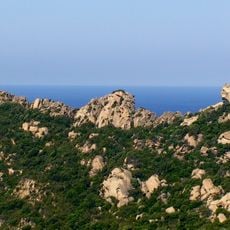
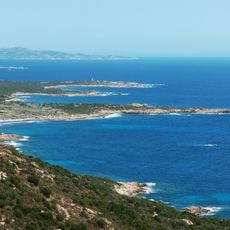
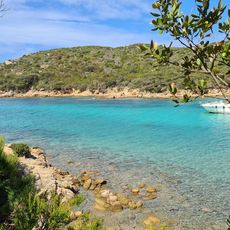
Access to the site is open, but the terrain is rough and uneven, so wear sturdy shoes and take your time to explore carefully. There are no constructed paths or barriers, giving you freedom to walk among the stones and take in the landscape as it naturally appears.
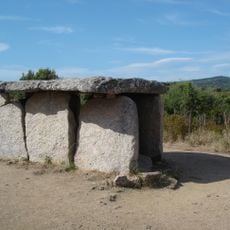
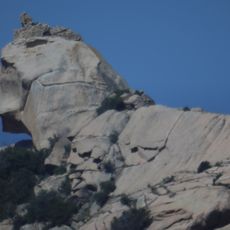
One granite slab of the surviving megalithic coffin, north of the rows, bears three lines of 11 to 12 small cupules. Some see star patterns or a water cult in them; a legend calls them E Pile, said to catch rainwater with magical virtues during storms.
The community of curious travelers
AroundUs brings together thousands of curated places, local tips, and hidden gems, enriched daily by 94,161 contributors worldwide.