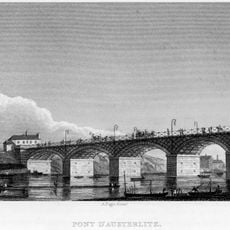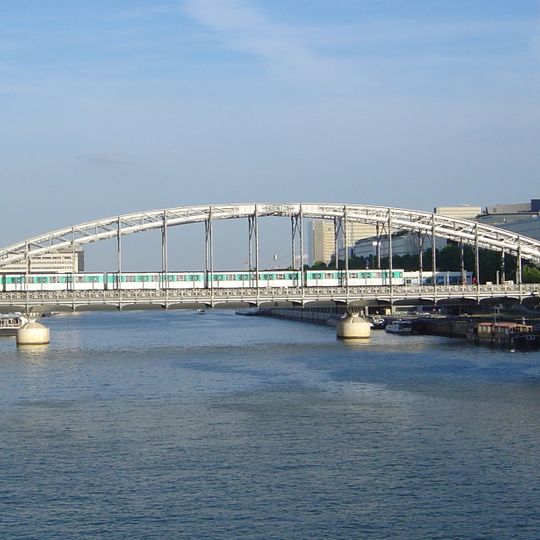
Viaduc d'Austerlitz, Steel metro bridge across Seine River in Paris, France
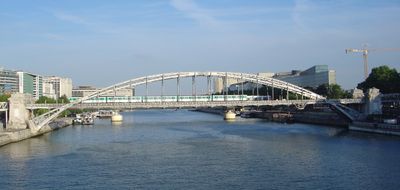
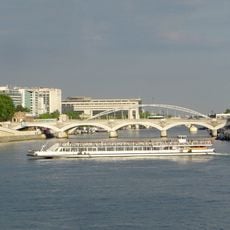
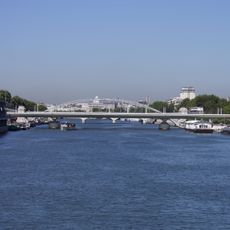
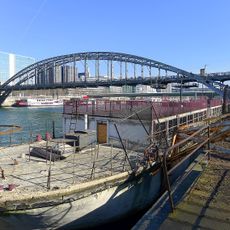
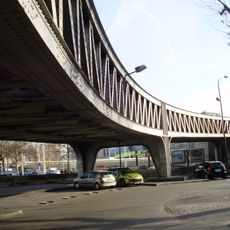
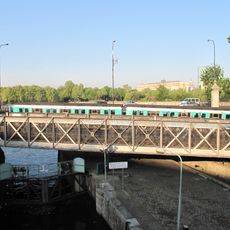
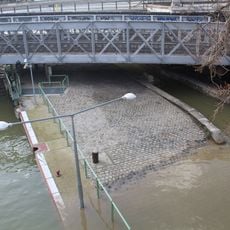
The Viaduc d'Austerlitz is a steel arch bridge spanning the Seine with two inverted parabolic arcs connected at three points. The 140-meter structure measures roughly 8.6 meters across and carries a single rail line above the water.
Engineer Louis Biette and Fulgence Bienvenüe designed this bridge in 1903, and it opened in 1904 as a record-breaking span for Parisian structures. The innovative engineering approach solved the challenge of crossing the river without underwater supports.
The bridge displays sea creatures in its decorative reliefs and steel supports bearing the Paris coat of arms. These details show how early 20th-century engineering projects blended practical design with artistic expression.
The bridge carries Métro Line 5 between Gare d'Austerlitz station on the left bank and Quai de la Rapée on the right bank. Passengers traveling this line get clear views of the river and the surrounding neighborhoods as the train crosses.
The bridge requires no pillars in the water, as its single-span design allows ships to pass freely underneath without obstruction. This solution was remarkable for its time, as it united practical necessity with structural grace.
The community of curious travelers
AroundUs brings together thousands of curated places, local tips, and hidden gems, enriched daily by 90,900 contributors worldwide.