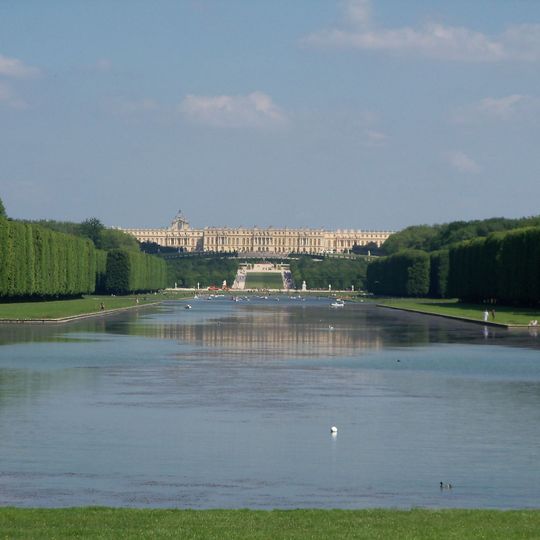
Grand Canal of Versailles, Water feature in Versailles, France
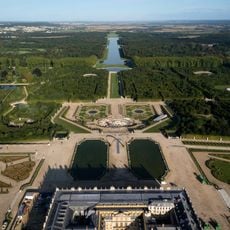
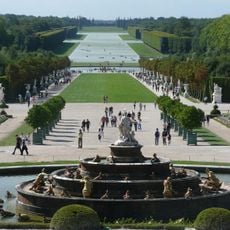
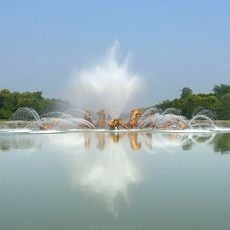
The Grand Canal of Versailles is a cross-shaped body of water whose main arm, 1,670 m long and 64 m wide, lies on the east-west axis of the château. The perpendicular arm, dug first, runs north-south for 1,070 m and is 77 m wide. Its eastern end is an octagonal basin of 1.3 hectares; the western end covers 5.9 hectares.
André Le Nôtre began the canal in 1667, completing it in 1679 despite the Royal Academy of Sciences warning against building on the uneven, marshy ground known as the 'étang puant'. The cross-shaped basin cut the Ru de Gally, which fed it. During the Revolution it was filled in and sown with wheat, and Louis XVIII later restored it.
Louis XIV kept a fleet on the canal: a three-masted ship, "Le Grand Vaisseau", a galley, shallops, brigantines and gondolas given by the Doge of Venice, plus two English yachts from 1675. From 1684 a fixed crew under captain Consolin, including six gondoliers, lived at the eastern end in buildings called "Petite Venise". Fireworks for royal fêtes started from the canal after 1679.
The canal is easily accessible on foot through multiple walking paths that connect different areas of the estate. Comfortable shoes are recommended since exploring the full extent of the water feature takes time to appreciate from various viewpoints.
During harsh winters, the canal's surface froze completely, transforming it into a popular spot for ice skating and sledding. This seasonal change created an entirely different way for visitors to engage with and enjoy this royal space.
The community of curious travelers
AroundUs brings together thousands of curated places, local tips, and hidden gems, enriched daily by 93,556 contributors worldwide.