
Unité d'Habitation de Marseille
Unité d'Habitation de Marseille, Modernist residential building in Marseille, France
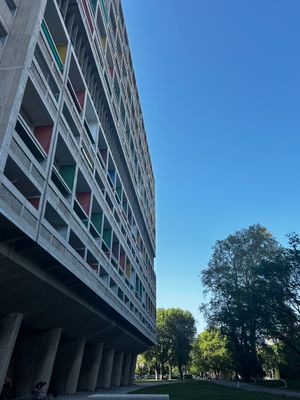
The Unité d'Habitation de Marseille is a concrete residential building in Sainte-Anne in Marseille, rising on heavy pillars and housing several hundred apartments. The facade shows large colored windows and balconies, while inside corridors connect the individual floors.
Le Corbusier designed this residential block after World War II to give many families a home in a time of great need. Work began in 1947 and ended in 1952, testing new methods for building social housing.
The name comes from the French term for housing unit and reflects the idea that people can live, work and spend their free time under one roof. Today architecture enthusiasts and visitors come here to experience the communal spaces and the open rooftop, where residents gather.
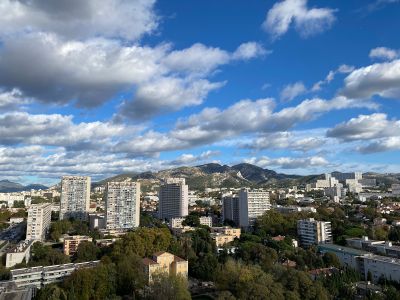
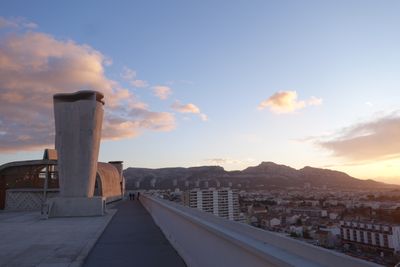
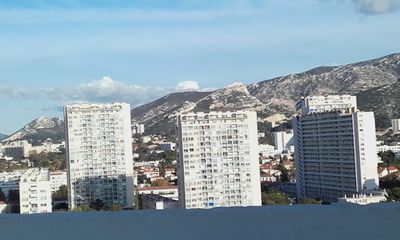
Visitors can explore parts of the building, including the rooftop, where open areas and views over the city unfold. Some areas remain reserved for residents, so it is advisable to check access beforehand.
Each apartment extends across the full width of the structure and thus receives daylight from both sides, which is rare in high-rise buildings. The units were inserted like bottles into a rack, with the concrete skeleton standing independent of the walls.
Location: Sainte-Anne
Architects: Le Corbusier
Architectural style: brutalist architecture
Floors above the ground: 18
Part of: The Architectural Work of Le Corbusier
Address: Boulevard Michelet
Opening Hours: Monday-Sunday 09:00-18:00
Website: https://marseille-tourisme.com/fr/decouvrir-marseille/les-incontournables/la-cite-radieuse
GPS coordinates: 43.26140,5.39639
Latest update: December 17, 2025 17:42
The Provence-Alpes-Côte d'Azur region depicts a land where architecture narrates a thousand years of history between sea and mountains. From the 12th-century Cistercian abbeys to the brutalist experiments of Le Corbusier, this area features an exceptional built heritage shaped by Mediterranean...
Brutalist architecture emerged in the decades following World War II, producing buildings that challenged conventional design through their honest expression of materials and function. From Le Corbusier's Unité d'Habitation in Marseille to Louis Kahn's National Assembly in Dhaka, these structures...
Marseille brings together ancient history and modern city life. This route reveals the many faces of the city through its most important places: the Notre-Dame de la Garde Basilica overlooks the entire city, while the Vieux-Port serves as the beating heart of urban activity. The harbor has been a...
Marseille offers a range of photo locations that show the city's history and geography. Visitors can watch daily life at the harbor in Vallon des Auffes, where fishing boats create traditional scenes, or walk the steep streets of the old quarter Le Panier, with its colorful facades and local shops....
Marseille has many rooftop and terrace bars that offer views across the city and the Mediterranean Sea. These places take advantage of the mild climate and invite you to enjoy cocktails and drinks from above. The selection ranges from modern hotels to historic buildings and contemporary art spaces...
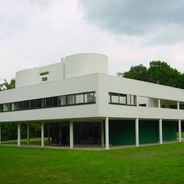
Le Corbusier shaped 20th century architecture by rethinking how people live, how cities work, and how buildings should function. This collection gathers around 30 of his most significant structures, built between the 1920s and 1960s across Europe, Asia, and the Americas. You can trace his ideas as...
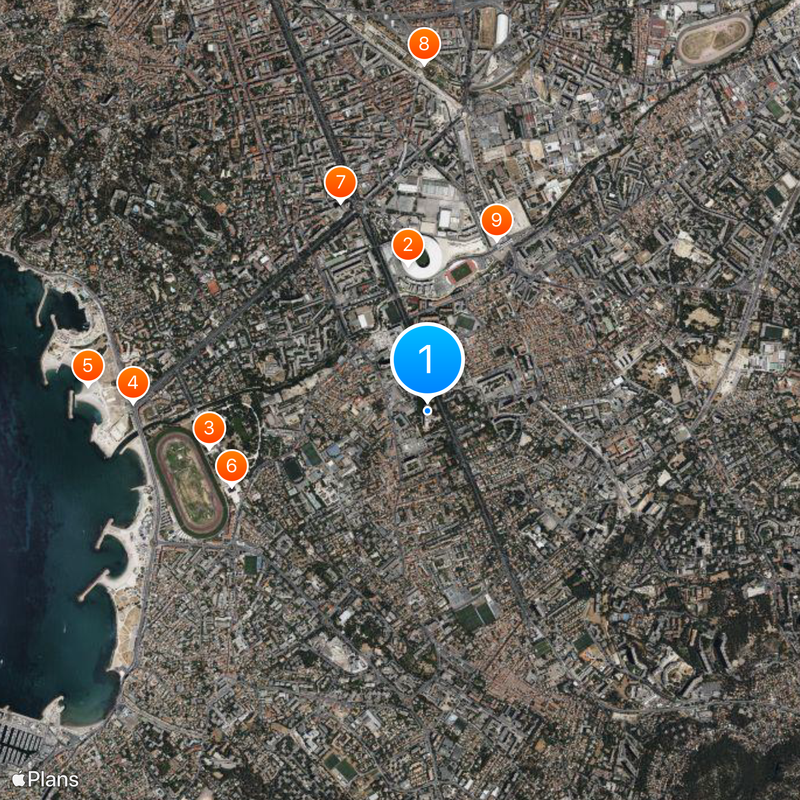
Stade Vélodrome
881 m
Jardin botanique E.M. Heckel
964 m
Jardin de la Magalone
164 m
Viaduc de Sainte-Marguerite
1 km
Jean Bouin
899 mSquare Albert Camus
1 kmSquare Charles Péguy
1.1 kmSquare Albert Samain
1 kmSquare Alfred de Vigny
991 mSquare Michelet
611 mToit de la Cité Radieuse
54 mToit de la Cité Radieuse
76 mMARS_96
126 mMARS_91
26 mJean Bouin
917 mMonument aux morts 1ère Guerre Mondiale
452 mMARS_90
183 mMARS_97
30 mMARS_93
10 mWaterfall
1 km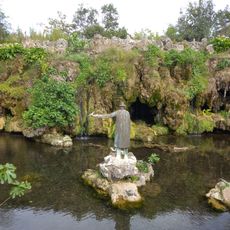
Homme aux Oiseaux
1 kmÀ Jamais Les Premiers
869 mMemorial, commemorative plaque
1.1 kmModulor
20 mDiane la Chasseresse
1.1 km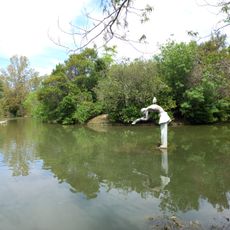
La Fée du Lac Ophélie
1.1 kmLa Méditerranée
1.1 kmMARS_84
1.1 kmVisited this place? Tap the stars to rate it and share your experience / photos with the community! Try now! You can cancel it anytime.
Discover hidden gems everywhere you go!
From secret cafés to breathtaking viewpoints, skip the crowded tourist spots and find places that match your style. Our app makes it easy with voice search, smart filtering, route optimization, and insider tips from travelers worldwide. Download now for the complete mobile experience.

A unique approach to discovering new places❞
— Le Figaro
All the places worth exploring❞
— France Info
A tailor-made excursion in just a few clicks❞
— 20 Minutes