Abbaye Saint-Étienne de Fontenay, Benedictine abbey in Saint-André-sur-Orne, Normandy, France.
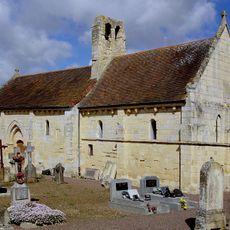
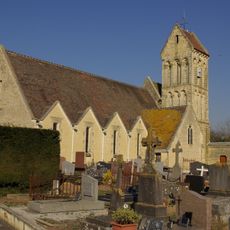
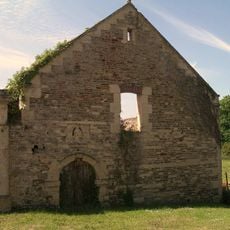
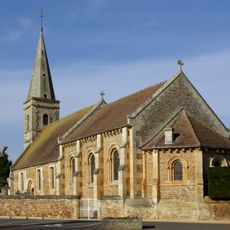
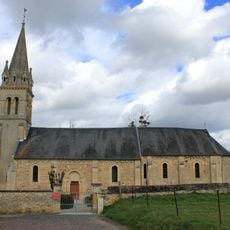
Abbaye Saint-Étienne de Fontenay stands at the edge of the Orne, 7 km south of Caen in Saint-André-sur-Orne. Its surviving conventual buildings date from the 13th and 18th centuries. The long stone range has a steep dark tiled roof, pale beige and grey masonry, and tall narrow buttresses capped with small stone blocks; a recessed pointed doorway with a small stair block sits near its lower left end.
Raoul I Tesson founded this Benedictine abbey on his Fontenay lands, probably shortly after the 1047 Battle of Val-ès-Dunes, with the consent of Hugh, Bishop of Bayeux. He, his brother Erneis and his nephew Robert Fils-Erneis, killed at Hastings in 1066 and brought back by William, were buried here. The Hundred Years' War, 16th-century Protestant pillaging and commendatory abbots impoverished it; Pierre-Daniel Huet, its abbot from 1699, worked to restore it.
The abbey takes its name from Saint Stephen, whose finger relic Robert the Magnificent brought back from the Holy Land. The 26 regular abbots ended in 1504 with Jean Conseil; from 1548 the monastery passed to commendatory abbots, among them Pierre-Daniel Huet, bishop of Avranches, who received it from Louis XIV in 1699 and left a correspondence describing daily life there.
The site is only open to visitors on certain occasions since parts of it remain privately owned and have restricted access. It helps to check ahead about opening conditions if you want to see the interior spaces.
The abbey holds the tombs of its founder Raoul I Tesson, his brother Erneis and his nephew Robert Fils-Erneis, killed at the Battle of Hastings in 1066; Duke William had the body brought back to Normandy for burial at Fontenay. On 16 August 1417 the English king Henry V spent a night here.
The community of curious travelers
AroundUs brings together thousands of curated places, local tips, and hidden gems, enriched daily by 94,657 contributors worldwide.