Abbaye de Sixt, Former abbey of Augustinian canons in Sixt-Fer-à-Cheval, France.
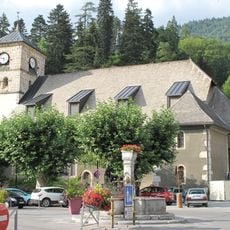
The Abbaye de Sixt is a former monastery near the Giffre River displaying Gothic architectural styles from multiple building phases. The structures reveal different layers through their windows, vaults, and walls dating to various periods.
Augustinian canons from Abondance founded a priory at Sixt before 1144, when it was raised to an abbey; its first abbot was Ponce. A bull of Pope Adrian IV in 1156 confirmed its lands, waters, alpine pastures and forests, and in 1167 the parish of Samoëns was granted to it. The abbey was closed in 1792 after the French invasion of Savoy.
The abbey belonged to the Congregation of Abondance, canons regular following the Rule of Saint Augustine, and its monks were canons, not Benedictines. A legendary life of the first abbot, Ponce, was written by canon Jean Depassier and published in 1666; it claims he came from the Faucigny family, which no primary source confirms. The abbey's pastoral activity in the high mountains dates from the Middle Ages.
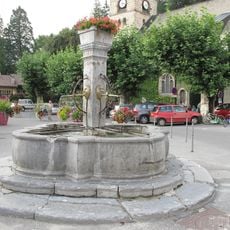
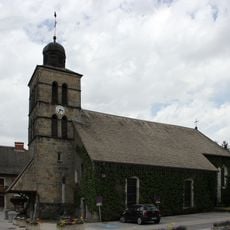
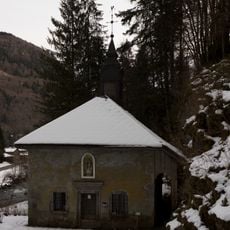
The former abbey stands on a terrace above the Giffre, at about 720 m, upstream of the Tines gorge and near the confluence with the Giffre des Fonds. Only the church and its granary, the old abbey building and the presbytery remain, several listed in 1997. The site lies within Sixt-Fer-à-Cheval; the clock tower and the armorial panel on its facade help orient visitors.
The abbey was suppressed in 1792 after the French invasion of Savoy, and only the church with its granary, the former abbey building and the presbytery survive. The surviving parts were inscribed as monuments historiques in 1997, and archaeological and historical research on the site resumed in the 2010s.
The community of curious travelers
AroundUs brings together thousands of curated places, local tips, and hidden gems, enriched daily by 94,565 contributors worldwide.