Ancienne Visitation de Caen, Historical convent in Caen, France
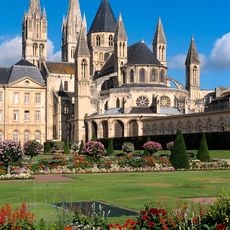
The Ancienne Visitation de Caen is a three-storey stone convent building with a pale beige facade, divided into bays by flat pilasters and topped by a steep slate roof with rounded dormer windows. A central section projects slightly forward under a curved pediment, and a dark blue door sits at the centre of the ground floor. The conventual buildings were built from 1632 to 1647 around a square courtyard laid out as a cloister in the 1650s.
Six Visitandine nuns settled in Caen in 1631 and bought an old manor with five acres of walled ground on 16 December 1632. From 1632 to 1647 Marie-Élisabeth de Maupeou had Guillaume Brodon build the convent buildings around a square courtyard laid out as a cloister in the 1650s; the church followed between 1648 and 1661, funded by the Harcourt family, who kept a burial vault there. The sisters were expelled in 1792 and the monastery became a barracks in the early 19th century.
The name comes from the Order of the Visitation, founded in Annecy in the 1610s by François de Sales and Jeanne de Chantal. The Caen community began in 1631 in a house on rue Saint-Jean, then moved in 1632 to a former manor with a dovecote and garden. The nuns ran a boarding school and briefly directed the Notre-Dame du Refuge institute for repentant prostitutes from 1644 to 1649.
The monument is located on Rue Caponière and is not open to the public on a daily basis. Visits are typically possible during special heritage events or by arranging visits in advance for groups.
The convent was founded in 1631 when six nuns from Lyon settled in a house on rue Saint-Jean, before buying an old manor with a dovecote and garden on 16 December 1632. The church, built from 1648 to 1661, was consecrated on 8 April 1668 by the Bishop of Bayeux, Mgr de Nesmond.
The community of curious travelers
AroundUs brings together thousands of curated places, local tips, and hidden gems, enriched daily by 93,955 contributors worldwide.