Château Raoul, Medieval castle in Châteauroux, France.
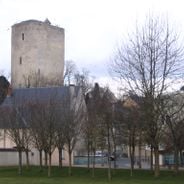
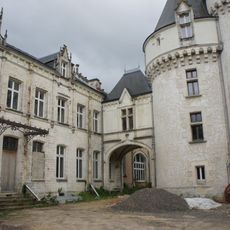
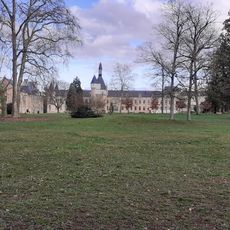
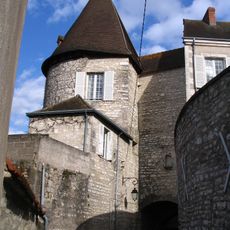
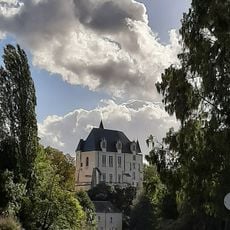
Château Raoul is a castle in Châteauroux that rises above the town's ramparts and overlooks the Indre Valley, featuring several towers and neo-gothic architectural elements from the 19th century. The building combines medieval structures with later modifications that shape its current appearance.
Raoul le Large, son of Ebbes-le-Noble, prince of Déols, left the family seat at Déols and built a fortress on a steep mound on the left bank of the Indre in the 10th century. The castle is first mentioned in 917 in the founding charter of the Notre-Dame abbey of Déols, and from 1112 at the latest it bore the name Château Raoul. Destroyed by fire in 1366, it was rebuilt around 1450 as a seigneurial residence by Guy III de Chauvigny; that building is the one protected as a monument historique.
The castle's name shaped the city's identity, as the medieval settlement gradually grew into what is now Châteauroux. This connection between fortress and town remains visible in how the city developed outward from this original stronghold.
The castle is part of the prefect's private residence and is not open to the public. Visitors can view the facade and roof, listed as monuments historiques since 1927, from the Place de la Victoire-et-des-Alliés and the Rue du Château-Raoul. The exterior is best seen on foot from these streets.
The Salle de la tapisserie, with thick walls and heavy wooden ceiling beams, holds seventeenth-century Aubusson tapestries depicting the biblical story of Esther, bought by the department in 1995. The Salle des délibérations, where the Indre general council met, has wood panelling and wall paintings by Fernand Maillaud, Raoul Adam and Abel Bertram showing the department's rural and industrial past.
The community of curious travelers
AroundUs brings together thousands of curated places, local tips, and hidden gems, enriched daily by 94,562 contributors worldwide.