Château d'Alba-la-Romaine, Medieval castle and art museum in Alba-la-Romaine, France
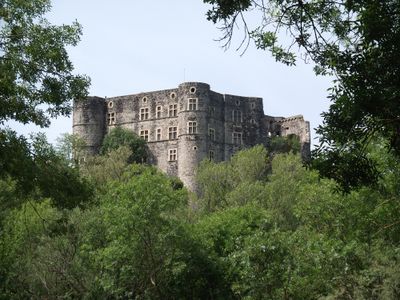
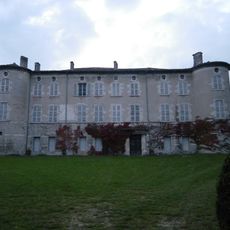
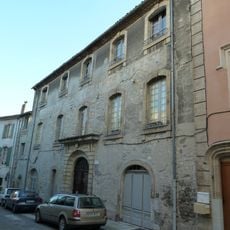
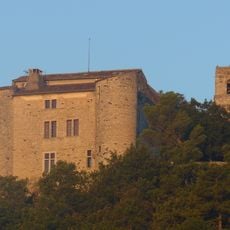
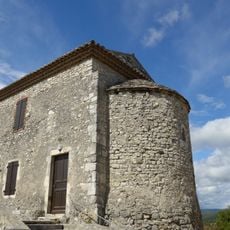
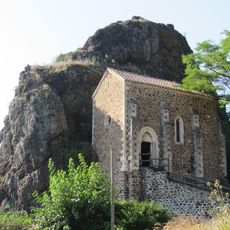
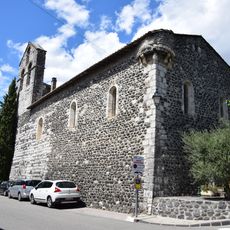
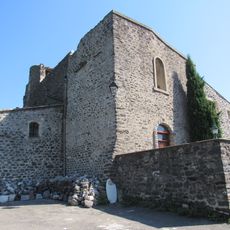
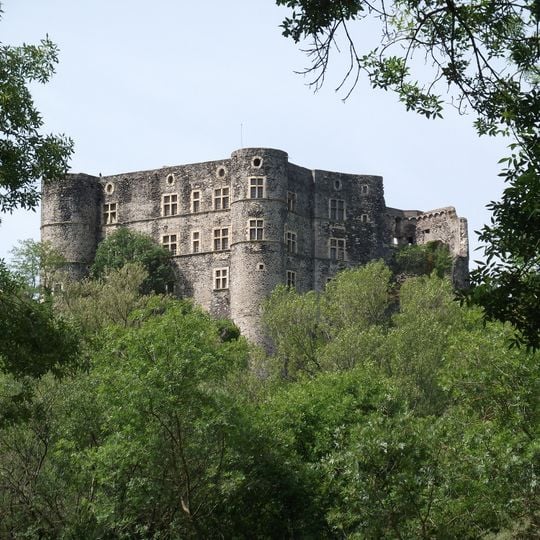
The Château d'Alba-la-Romaine stands above the village on a volcanic dyke, built of grey rubble stone. Its main facade rises three storeys with four rows of rectangular and arched windows and small round openings near the top; a round stair turret with slit windows projects at its right end, and a round tower with a conical roof marks the corner. A lower ruined wing extends to the right.
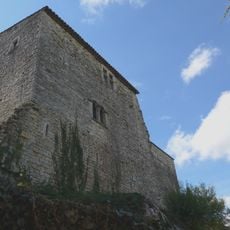
The bishops of Viviers built the square keep in the 11th century on a volcanic dyke above the Escoutay, and the population gathered around it to form the first castrum. The Aps family held the lordship from the 11th century; in 1267 Pons II des Deux-Chiens placed it under Louis IX's protection, and around 1290 it passed to the Adhémar de Grignan. Georges de La Beaume de Suze gave the castle its present form with the château neuf extension after 1612.
The castle was long called château d'Aps, after the medieval name of the village; Alba, from a Gaulish word for height, was only restored in 1903. It hosts contemporary art exhibitions in spring, summer and autumn and concerts in summer. The building has been listed as a monument historique.
Access to the castle is provided through guided tours that explain both the medieval structure and current art exhibitions throughout the year. Plan enough time to explore the different rooms, as exhibitions change seasonally and offer varied experiences with each visit.
The castle was long called château d'Aps, and the name Alba comes from a Gaulish word for height or mountain; the town only took the name Alba in 1903. The keep was built in the 11th century by the bishops of Viviers on a volcanic dyke.
The community of curious travelers
AroundUs brings together thousands of curated places, local tips, and hidden gems, enriched daily by 93,784 contributors worldwide.