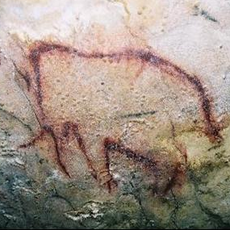
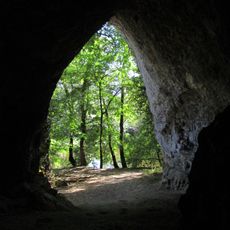
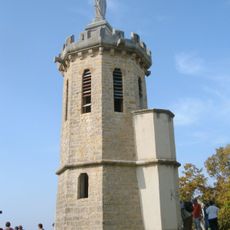
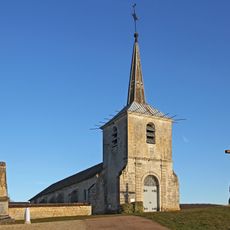
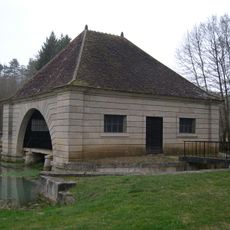
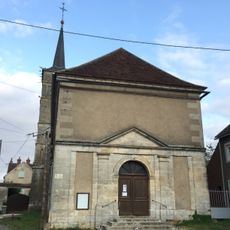
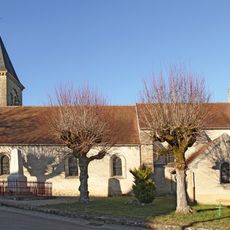
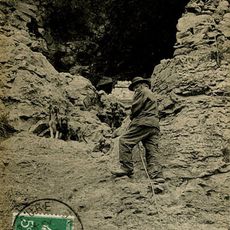
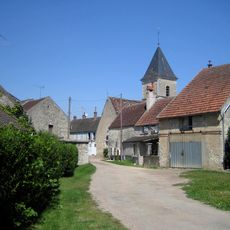
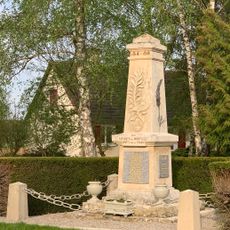
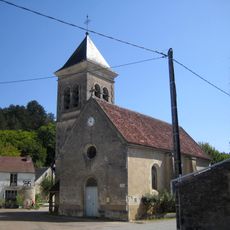
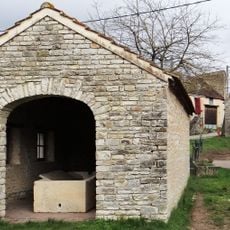
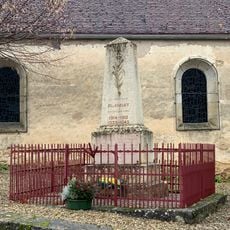
Camp antique de Cora, Roman military camp in Saint-Moré, France.
Camp antique de Cora is a Roman military fortification situated on a limestone plateau with an oval shape spanning roughly 600 meters in length and 400 meters in width. The site spreads across a substantial area and displays the characteristic layout of Roman fortified camps with earthen ramparts and reinforced entrances.
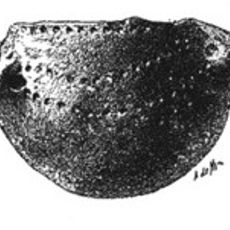
The site was first a Neolithic and Bronze Age camp before becoming a Roman camp after Caesar's conquest of Gaul, when Agrippa built the Via Agrippa from Lugdunum to the North Sea and established redoubts along it. The usurper Silvanus and the emperor Julian, in 356, are said to have stopped there. Around 400 a Sarmatian auxiliary detachment guarded the camp; it was probably besieged in 407 and seems to have been destroyed with the Frankish arrival in the 5th century.
Cora is the Latin name of the Cure river, sometimes spelled Chora on the 19th-century staff map. The 6th-century Auxerre bishop Aunaire's parish list records the site as Coræ-vicus, and Ammianus Marcellinus names Cora as a route discussed by a council of war. The low dry-stone wall, topped with moss and grass, is the visible remnant of the fortification.
The site is walkable and offers views of the original plateau landscape with its natural slopes and earthen structures. Good planning is helpful since the location is remote with minimal facilities nearby.
The name Cora is the Latin form of the Cure river, sometimes spelled Chora on 19th-century staff maps. The hill of Villaucerre already appears under that name on a plan of 1787, long before archaeological study of the site.
The community of curious travelers
AroundUs brings together thousands of curated places, local tips, and hidden gems, enriched daily by 94,130 contributors worldwide.