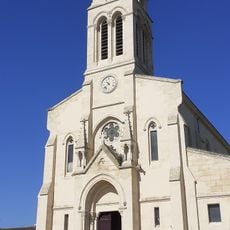
Château Carbonnieux, Wine estate in Léognan, France.
Château Carbonnieux is a wine estate in Léognan whose 92-hectare vineyard surrounds the château in one block. The pale stone facade has a steep grey slate roof, a low central wing under reddish tiles, and walls covered with clipped climbing plants around tall windows with pale blue-grey shutters. A rounded archway with a timber door opens onto a gravel courtyard.
Benedictine monks of the Sainte-Croix abbey in Bordeaux earned income from winegrowing here as early as the 13th century. The Ferron family owned the estate from 1519 to 1740, then, ruined, ceded it back to the monks, who expanded it to 160 hectares. In 1791 Elie Bouchereau bought it after the Revolution; the Perrin family acquired it in 1956.
The name is said to come from Ramon Carbonnieu, the first to clear the land. Benedictine monks of Sainte-Croix ran the estate and, according to legend, sent white wine to the Sultan of Constantinople as "eau minérale de Carbonnieux". Thomas Jefferson visited in 1787. The Bouchereau family later assembled 1,242 vine plants of French and foreign varieties.
The estate lies at Léognan, southwest of Bordeaux, and guided tours with tastings are booked in advance. Harvest runs five to seven weeks with up to 120 seasonal pickers, so visits during the vendanges may be restricted. The 92-hectare vineyard surrounds the château in one block; the gravel courtyard in front of the arched entrance is the natural starting point.
The estate has deep roots in monastic history that shaped how it developed over time. This religious heritage influenced the way wine production evolved at this location.
The community of curious travelers
AroundUs brings together thousands of curated places, local tips, and hidden gems, enriched daily by 94,357 contributors worldwide.