Château de la Petite Malmaison, Empire style castle in Rueil-Malmaison, France.
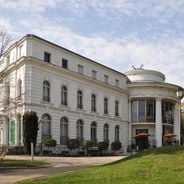
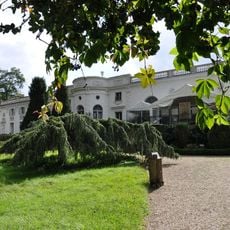
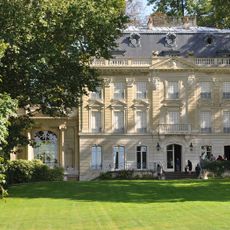
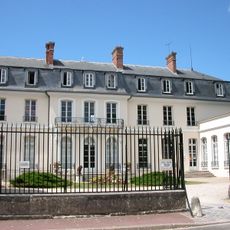
Château de la Petite Malmaison is a 19th-century château in Rueil-Malmaison, built 1803–1805 as a reception pavilion for Empress Joséphine beside a large heated greenhouse, demolished in 1827. Its cream stone facade has a taller central block with round windows and an arched doorway, wings on either side, and a raised terrace with a white balustrade and canvas awning on the right. The former greenhouse range survives only as the remodelled house, whose east wing was reduced to one storey and given a roof balustrade.
Begun in 1804 for Empress Josephine by landscape architect Jean-Marie Morel, the great Malmaison greenhouse was finished at the end of 1805 to plans by Jean-Thomas Thibault and Barthélemy Vignon, with the reception pavilion built between 1803 and 1805. Its glass roof, about 50 by 19 metres, was the first of such size in France. Maintenance costs led to the greenhouse's demolition in 1827; the Swedish banker Jonas-Philip Hagerman bought the estate in 1828, and Pascal of the Two Sicilies, Count of Bari, owned it from 1887 and died there in 1904.
The name Petite Malmaison sets it apart from the neighbouring Château de Malmaison, and the pavilion served as a place to rest after touring the greenhouse, where guests viewed rare plants from a central rotunda decorated by Louis-Martin Berthault in 1807. Joséphine grew jasmine, roses, hydrangeas and Parma violets there, and the summer dining room added later keeps frescoes inspired by Pompeian decors, including a Flora after the Villa Arianna at Stabiae.
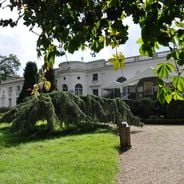
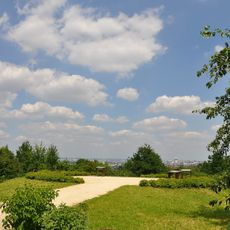
The château stands in Rueil-Malmaison, separated from the Château de Malmaison by the subdivision of the former park. The grounds, with a pond and plantings of chestnut, cedar, bald cypress, yew and boxwood, are included in the monument protection. The building itself is a private residence, so visits concern the exterior and the park rather than the salons.
The glass and metal construction was innovative for its time and set new standards for modern greenhouses across Europe. This made the property a place where new building techniques were tested, techniques that later became widespread in many other projects.
The community of curious travelers
AroundUs brings together thousands of curated places, local tips, and hidden gems, enriched daily by 92,649 contributors worldwide.