Cimetière monumental de Rouen, Listed cemetery in Rouen, France
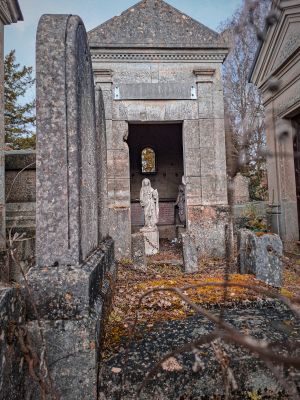
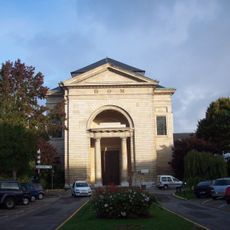
The cimetière monumental de Rouen covers ten hectares on the Côte des Sapins, north-east of the city centre. Its southern entrance is a monumental gateway inspired by Egyptian architecture, flanked by two white pavilions inscribed "METIERE" and "MONUMENT". Inside, a pale stone chapel with a domed cupola stands on the upper ground, and the historic section is laid out in family vaults in neo-classical and neo-gothic styles.
In 1823 Rouen's municipality planned a monumental cemetery on the Côte des Sapins, a sheep pasture north of the city. A royal ordinance of 28 June 1824 authorised the necropolis, laid out by municipal architect Charles-Félix Maillet du Boullay, who designed the Egyptian-inspired south entrance, the chapel and the cross. Works were completed in 1828. Under the Second Empire the cemetery became the burial ground of the Rouennais elite.
Many of the monuments here are decorated with symbols drawn from nature, such as poppies, laurels, owls, and butterflies. Each symbol carries a meaning, often pointing to ideas like beauty, wisdom, or the passing of time.
The cemetery is open year-round, with longer hours from April to November and slightly reduced hours in winter. Maps and signs are available on site to help visitors find their way through the different sections.
The cemetery is locally known as Rouen's Père Lachaise, and among those buried here is Gustave Flaubert, the author of Madame Bovary. His grave is deliberately plain, with no large ornaments, which reflects his personal style.
The community of curious travelers
AroundUs brings together thousands of curated places, local tips, and hidden gems, enriched daily by 92,646 contributors worldwide.