Cordeliers Cloister, Medieval cloister in Saint-Émilion, France
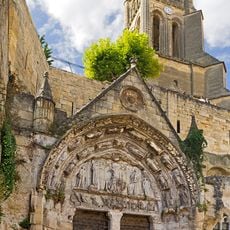
Cordeliers Cloister is a monastic complex in Saint-Émilion built from local limestone, combining Romanesque round arches of the mid-14th century with Gothic pointed arches behind. Its columns are monolithic, cut from a single stone from base to capital, with small crests hidden on the abacuses. A small tower remains of the former bell tower, and a network of cellars and tunnels runs three kilometres beneath the village.
A first Franciscan monastery was destroyed in 1337, and the friars received permission the following year to build a new one within the town walls of Saint-Émilion. The cloister that survives today was built over the decades that followed and is now a classified historical monument.
The name Cordeliers comes from the rope belts worn by the Franciscan friars, a nickname given by Jean de Beauffort during the Seventh Crusade because of their coarse brown or grey cloth and cord belt. In the 19th century the abandoned cloister became a haunt for lovers, eccentrics, romantics and goths, as described by writer Maurice Graterrole. Since the late 19th century the underground cellars have been used to make sparkling wines, and visitors today pass through the cloister to reach them.
The site can be visited both above ground and in the caves below, which are carved directly into the limestone. The underground sections are noticeably cooler year-round, so bringing a light layer is a good idea before heading down.
Beneath the cloister runs a network of cellars and tunnels about three kilometres long, cut into the limestone under the village. Their constant temperature of 12 °C and total darkness allow the wines to ferment. Les Cordeliers make around ten white and rosé sparkling wines, brut and demi-sec, from Merlot, Sémillon, Cabernet Franc and Sauvignon.
The community of curious travelers
AroundUs brings together thousands of curated places, local tips, and hidden gems, enriched daily by 94,757 contributors worldwide.