Église monolithe, Saint-Émilion, Rock-cut church in Saint-Émilion, France
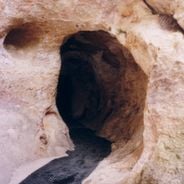
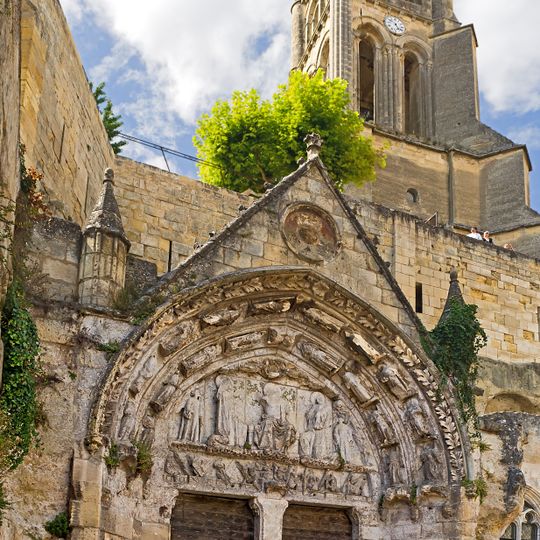
The Monolithic Church of Saint-Émilion is a church entirely cut into a limestone hillside beneath the Place du Clocher and the Place des Créneaux. Its nave and two aisles of nearly equal size are divided into six bays by broad monolithic pillars, and the central nave rises eleven metres. The west front shows a pointed-arch portal with carved figures and a triangular gable with a central medallion.
A Breton monk named Émilion settled as a hermit here and died in 767; disciples dug a modest underground chamber. Around the start of the 12th century Pierre de Castillon, viscount of Aubeterre, had the church carved from the top down, a technique he had seen in Cappadocia, as a memoria of the Holy Sepulchre. An inscription on the third south pillar records its dedication to Saint Émilion in the late 11th or early 12th century.
The name Saint-Émilion comes from the Breton monk who lived as a hermit here and died in 767; his disciples dug a modest underground chamber in the rock. The church was later dedicated to him, as an inscription on the third south pillar of the nave records, on the seventh day of the ides of December. The bell tower, 53 m high, is the highest point of the town.
The church is reached from Place de l'Église Monolithe, between Place du Clocher and the lower square; the present parish church stands about 100 metres north along Rue du Clocher. The bell tower rises on a terrace at the level of Place du Clocher and is the highest point of Saint-Émilion. The underground rooms are entered on foot, and the tower can be climbed for a view over the town.
Stonemasons removed approximately 15,000 cubic meters of limestone to create this underground space. This enormous quantity illustrates the years of intensive labor behind this architectural work.
The community of curious travelers
AroundUs brings together thousands of curated places, local tips, and hidden gems, enriched daily by 92,848 contributors worldwide.