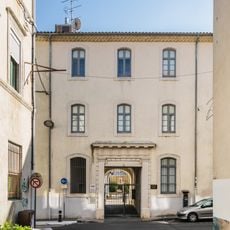
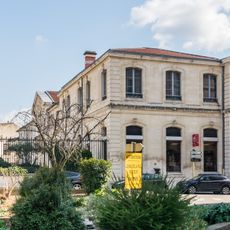
Fort Vauban, Military fortress in Alès, France.
Fort Vauban is a military fortress in Alès featuring angular bastions and an asymmetric layout designed to defend against attacks from multiple angles. The structure follows precise military principles where each elevation and corner was strategically planned for maximum protection.
In 1686, after the revocation of the Edict of Nantes, the intendant de Basville decided to build a fort at Alès to act quickly against Protestant assemblies. François Ferry was chief engineer, with Michel Raulet recruiting local architects and contractors; Vauban himself was absent from the Cévennes sites. The Sainte-Anne tower was demolished and the barons' castle razed except for its 13th-century gate, and work ended as early as 1688.
The fort's name honours Vauban, though he never came to the Cévennes building sites; the work was coordinated by engineer François Ferry, with Michel Raulet recruiting local architects and contractors. The 13th-century gate of the barons' castle was kept and built into the curtain wall, while the Capuchin convent was demolished. A royal garrison was installed, and the fort could also serve as a prison for Protestants.
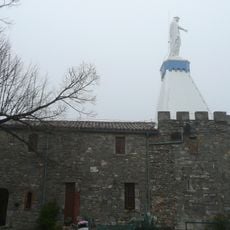
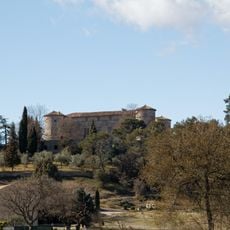
The fort stands on the butte de la Roque above the town centre; the entrance gate opens in a staircase toward the town, covered by a half-moon outwork, with an emergency gate defended by a drawbridge and a grille on the counterscarp. The bastions, their bartizans, the gate and the access bridge were listed as monuments historiques on 24 May 1973. The site is reached on foot from the centre.
The fortress was specifically adapted to the local landscape, with bastions designed to account for the surrounding hills and valleys. This terrain-specific approach sets it apart from other fortifications built during the same period.
The community of curious travelers
AroundUs brings together thousands of curated places, local tips, and hidden gems, enriched daily by 92,665 contributors worldwide.