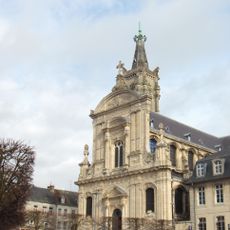
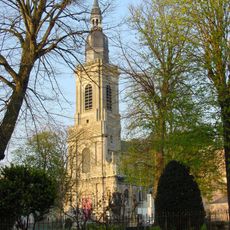
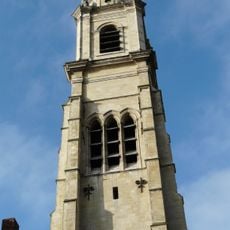
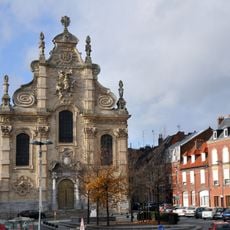
Musée de Cambrai, Art museum in Cambrai, France.
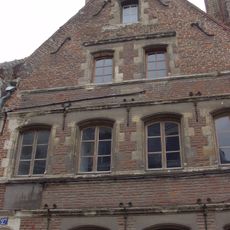
The Musée de Cambrai occupies the Hôtel de Francqueville, a mansion built between April 1719 and December 1720 for Jean-Baptiste de Francqueville. Its main building has three levels alternating brick and limestone, while the street portal displays carved floral reliefs and a shield typical of the late Louis XIV and Regency style. Two modern wings were added in 1990.
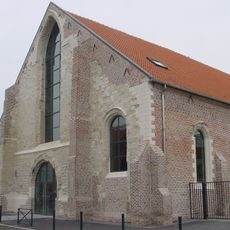
The museum's core collection was assembled during the French Revolution from revolutionary seizures and first shown in the church of Saint-Géry. After the collection moved several times, the museum was created in 1846 in the Halle hall, and in 1893 it moved into the Hôtel de Francqueville, bequeathed by industrialist Auguste Legrand. In March 1918 a bomb damaged the building and destroyed over two hundred works.
The museum's name comes from the city, and its collection grew from works seized during the Revolution, first shown in the church of Saint-Géry. Today it holds works by Auguste Rodin, Camille Claudel, James Tissot and Henri Matisse, plus a large collection of geometric abstraction. The 1893 move into the Hôtel de Francqueville brought major donations, notably Ernest Delloye's gift of about two hundred objects and documents on Cambrai's history.
The entrance is the carved stone portal on the street, marked by a plaque reading "Musée de Cambrai"; the door opens onto a vestibule whose honour staircase leads to the first-floor salons facing the garden. The 1990 wings hold the reserves and workshops rather than display rooms, so the visit follows the historic house.
The museum has a specialized osteoarchaeology collection that scientifically examines human skeletal remains. This unusual section allows visitors to learn about the region's early inhabitants through their physical remains.
The community of curious travelers
AroundUs brings together thousands of curated places, local tips, and hidden gems, enriched daily by 94,700 contributors worldwide.