Oppidum de Saint-Blaise, Archaeological site in Saint-Mitre-les-Remparts, France.
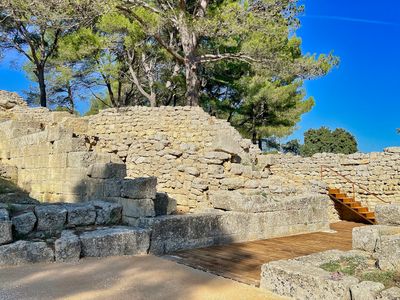
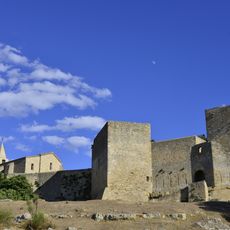
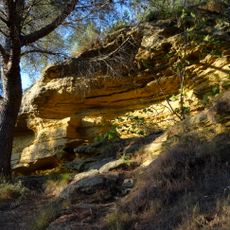
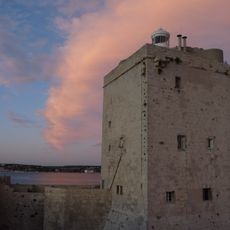
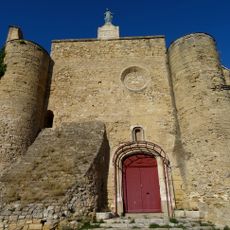
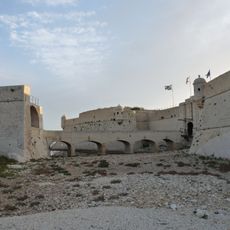
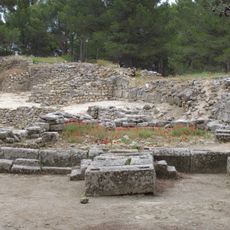
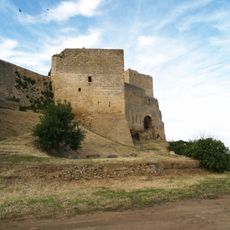
Oppidum de Saint-Blaise occupies two limestone plateaus on a barred spur above the Étang de Lavalduc and the Étang de Citis, in Saint-Mitre-les-Remparts. The lower Ville-Basse sits at about 50 m and the upper Ville-Haute, with La Citadelle at its southern end, reaches roughly 65 m. Visitors see low ruined walls and foundations of pale grey stone, including large rectangular blocks forming a stepped structure, with rough masonry enclosures farther back.
Occupation of the Castillon spur goes back to the 5th millennium BCE. In the 7th century BCE the Etruscans set up a trading post here for salt taken from the surrounding lagoons, and the town prospered in the Etruscan and Greek periods, at one point rivalling Marseille. It was destroyed in the 9th century and never rebuilt; a remnant stayed until 1390, when the last inhabitants moved to Saint-Mitre.
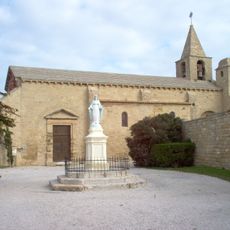
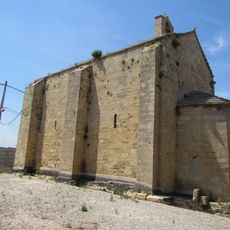
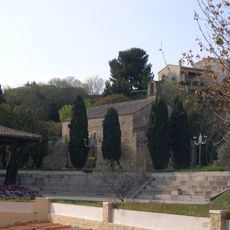
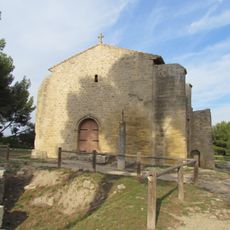
The name Saint-Blaise comes from a chapel dedicated to Saint Blaise, built on the site in the Middle Ages. The medieval village of Castelveyre grew on the lower plateau, called Ville-Basse, and its inhabitants left in 1390 for Saint-Mitre. Visitors can still see the ruined walls of that village beside the older stone foundations.
The site has two plateaus about 15 m apart: Ville-Basse at 50 m and Ville-Haute, with La Citadelle, at roughly 65 m. Paths are uneven stone and earth, so wear sturdy shoes. A rock-cut path to the Source de la Tourtoulane on the east flank was rediscovered in 2010; a trail from Ville-Haute reaches the west postern.
Multiple defensive walls stack on top of each other like layered sheets because each generation built walls over the previous ones. This shows how people repeatedly fortified the same hilltop across thousands of years.
The community of curious travelers
AroundUs brings together thousands of curated places, local tips, and hidden gems, enriched daily by 94,610 contributors worldwide.