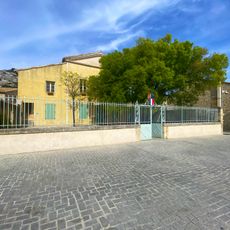
Oppidum des Caisses de Jean-Jean, Archaeological site on limestone cliffs in Mouriès, France.
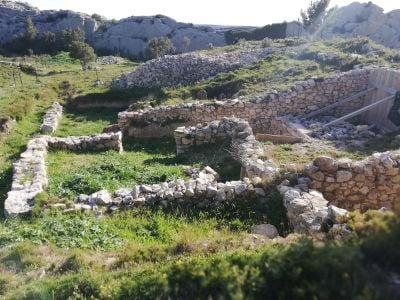
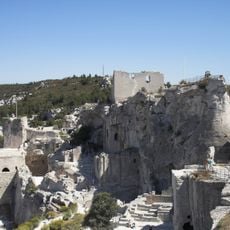
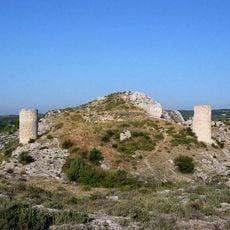
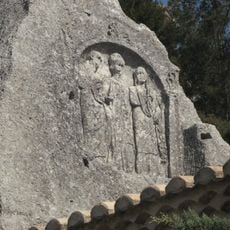
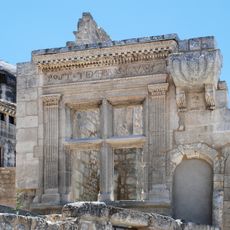
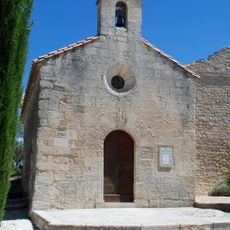
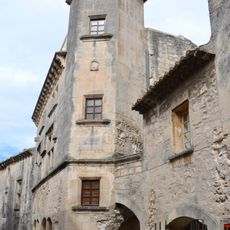
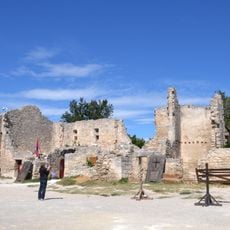
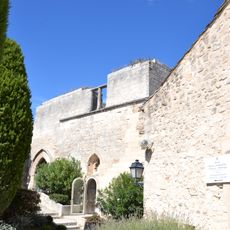
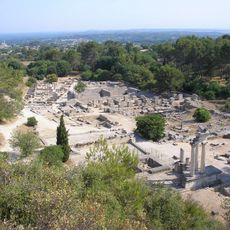
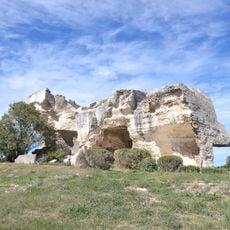
Oppidum des Caisses de Jean-Jean is an archaeological site on limestone cliffs in Mouriès, built across a rocky spur where two limestone cliff faces converge to form a natural acropolis. The site displays remnants of defensive walls and multiple ancient settlement areas positioned across this elevated terrain.
The oppidum was excavated by archaeologist Fernand Benoit between 1935 and 1942; he found no house walls between the two ramparts but did find indigenous pottery, suggesting the most intense occupation ran from the 5th to the 2nd century BC. The site was inscribed as a monument historique by decree on 2 February 1937.
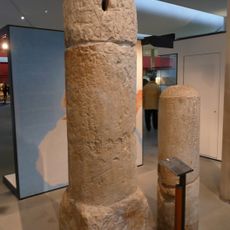
The site's name comes from the Jean-Jean property, where prefect-historian Christophe de Villeneuve-Bargemon located the ancient town of Tericiae in 1824. Limestone stelae found reused in the rampart, now kept in Arles, are carved with horses and heroic riders bearing javelins and comb-like signs.
Visitors can explore the archaeological remains via marked walking trails that connect different sections of the ancient fortified settlement across the site. The paths are relatively straightforward to follow and offer changing perspectives of the entire location.
The site's name comes from the Jean-Jean property, where prefect-historian Christophe de Villeneuve-Bargemon placed the ancient town of Tericiae in 1824. Since 1895, following L. Rochetin's studies, scholars have generally located Tericiae below the oppidum rather than on it, though Fernand Benoit suggested a precise spot between the Caisses, the Castellas, the Mazet and the Baumettes hamlet.
The community of curious travelers
AroundUs brings together thousands of curated places, local tips, and hidden gems, enriched daily by 94,464 contributors worldwide.