Trémaïe, Religious monument in Les Baux-de-Provence, France.
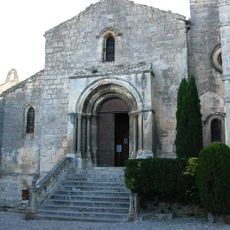
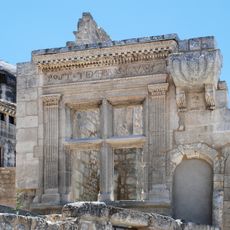
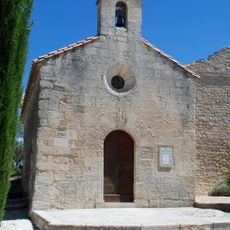
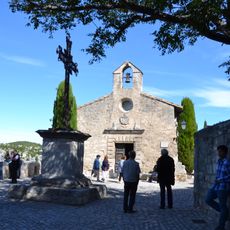
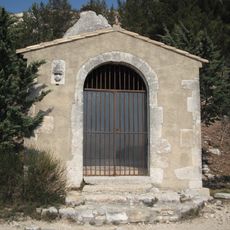
Trémaïe is a Gallo-Roman rock bas-relief carved into a fallen boulder southeast of the Baux-de-Provence plateau. A shallow arched niche, 2 m by 1.35 m, holds three high-relief figures 1.75 to 1.83 m tall: a man on the left and two women, the central one tallest. A small 1845 chapel with a tiled roof and barred windows leans against the rock below.
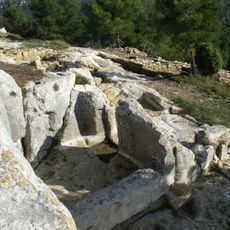
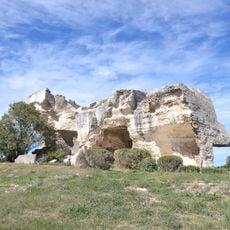
The Trémaïe is a Gallo-Roman rock bas-relief carved on a 7.60 by 4.50 metre boulder that fell from the plateau southeast of Les Baux. A chapel was built against the rock in 1845 to stop it rolling further. From 1830 to about 1910, villagers made a pilgrimage here every 25 May, carrying a polychrome statue of the boat of the Three Marys.
The Provençal name Tremaïe, meaning "Three Maries", comes from locals who saw three women in the relief and linked them to the holy Maries. From 1830 to about 1910, villagers walked here every 25 May carrying a small polychrome statue of the boat that brought the Three Maries to Provence, a cheaper pilgrimage than the one to Saintes-Maries-de-la-Mer.
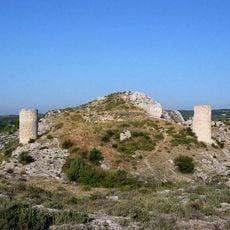
Access is by a hiking path on the south-eastern side of the Baux-de-Provence plateau, below the castle. The bas-relief sits 4 m above ground, just above the roof of the chapel built against the rock in 1845, so it is seen from below and at a distance.
The three figures are not three women: the left-hand one is a man, which undermines the popular identification with the saintes Maries. A worn epitaph below the relief, read differently by Villeneuve-Bargemon, Héron de Villefosse and Janon, names a Caldus and a dedication for someone's health.
The community of curious travelers
AroundUs brings together thousands of curated places, local tips, and hidden gems, enriched daily by 92,938 contributors worldwide.