Glanum Dam, Roman arch dam near Saint-Rémy-de-Provence, France
Glanum Dam is a Roman construction with two curved parallel stone walls connected by a layer of earth and rubble. The structure was designed to collect and hold water for the settlement.
The dam was built in the first half of the first century BC as Rome expanded its presence in the region. It was part of a broader water management system serving the nearby settlement.
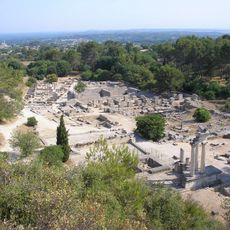
The dam's name comes from the Roman town of Glanum, whose ruins lie near Saint-Rémy-de-Provence. The reservoir behind the 1891 replacement is called Lac de Peirou, and the access road is the Chemin du Barrage. The Roman structure is known today from a single drawing, since the modern dam destroyed its remains.
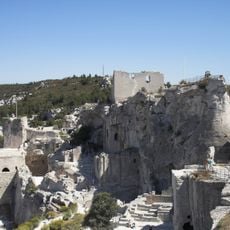
The site lies in the Vallon de Baume, a gorge cut into the Alpilles hills south of Glanum, reached via the Chemin du Barrage. The 1891 dam and its reservoir, the Lac de Peirou, stand close above the Roman remains, so the ground is steep and uneven rather than flat. The structure is best viewed from above and to its left.
Archaeologists consider this dam one of the oldest known examples of curved architecture in water engineering. Roman builders developed a technique here that was replicated in other regions centuries later.
The community of curious travelers
AroundUs brings together thousands of curated places, local tips, and hidden gems, enriched daily by 94,505 contributors worldwide.