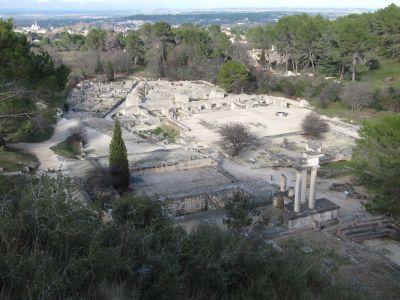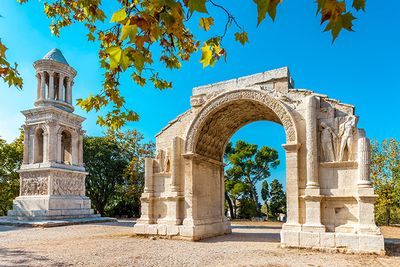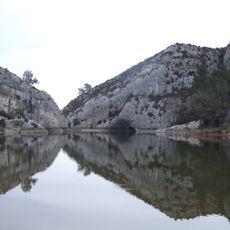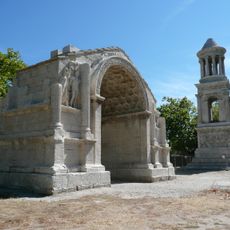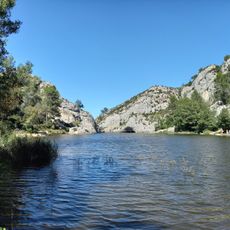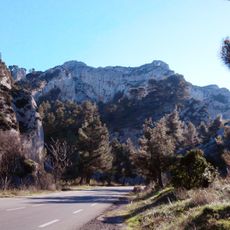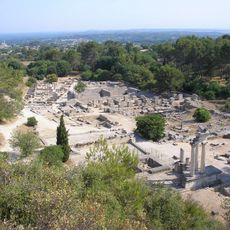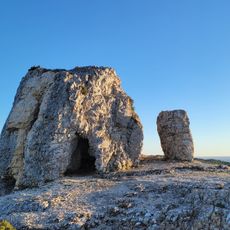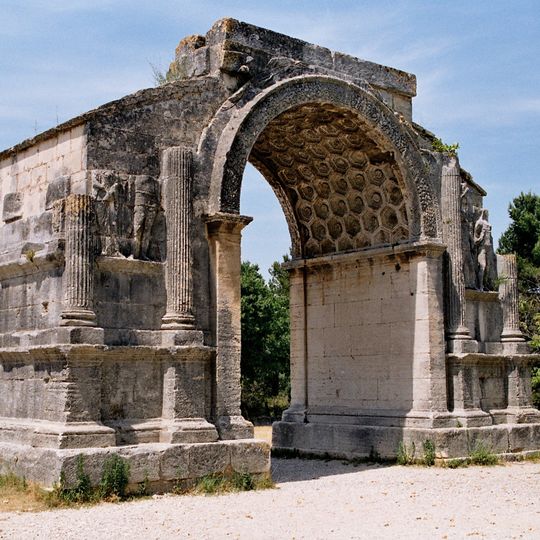
Glanum, Roman archaeological site in Saint-Rémy-de-Provence, France.
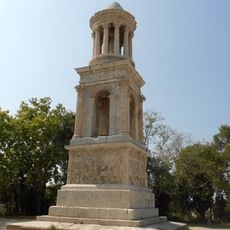
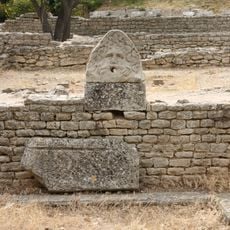
Glanum features well-preserved remains from the Roman era, including a triumphal arch with detailed carvings, temples, baths, residential buildings, and the mausoleum of the Julii showcasing sophisticated funerary architecture.
The Celto-Ligurian Salyens founded Glanum around a healing spring in the 6th century BC, building an oppidum below the Alpilles. After clashes with Massalia, the town was destroyed by Rome in 125 BC and again in 90 BC. It recovered on the Via Domitia, and under Augustus became an oppidum latinum with a forum, temples and baths. The Alamanni destroyed it in 260 AD, and its people moved north to Saint-Rémy.
The healing spring at Glanum was dedicated to the Celtic god Glanis and his companions, the Glanicae, later equated with the Roman Matres. Residents bore Celtic names such as Vrittakos, Eporix and Litumaros, and honoured Rosmerta and Epona. Excavated pottery and cooking pots show food was boiled rather than fried, and severed enemy heads were displayed at the city gate.
The site opens daily from 9:30 AM to 6:30 PM during summer and 10:00 AM to 5:00 PM in winter, with admission costing approximately 9 euros and free entry for European Union residents under 26 years old.
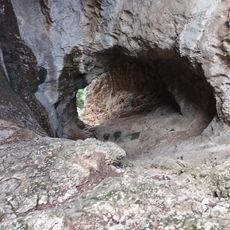
Glanum preserves a sacred spring that served as a center for worship and ritual practices, believed to honor healing deities and attracting pilgrims throughout antiquity to its protected location at the foot of the Alpilles mountains.
The community of curious travelers
AroundUs brings together thousands of curated places, local tips, and hidden gems, enriched daily by 94,473 contributors worldwide.