Pavillon Flaubert, Museum and historical monument in Croisset, France
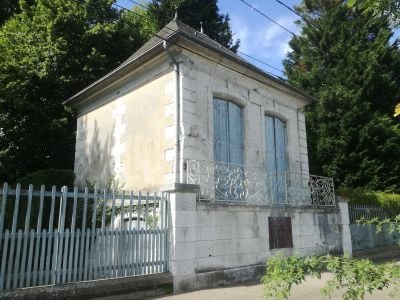
Pavillon Flaubert is the only surviving structure of the estate Gustave Flaubert's father bought in 1844 at Croisset, in Canteleu on the Seine near Rouen. The two-storey stone building has a pale mottled facade, white quoins at the corners, two tall arched windows with light blue shutters on the upper floor, and a white stone base wall topped by a swirling pale metal railing. A square dark red plaque is mounted on the lower right wall.
The writer's father purchased the property in 1844 and the author spent more than 3 decades of his life there. The small house survived bombardment during World War II and is now preserved as a historical monument.
The pavilion is named after Gustave Flaubert, the French writer who created his literary works within these walls. The small house reflects how a 19th-century author lived and worked among his belongings and daily surroundings.
Visits are possible on certain days, so check the opening hours before traveling. The house is near the Seine River and accessible by public transportation.
The pavilion displays a gilded Buddha that stood in Flaubert's first-floor study in the house that no longer exists, alongside goose quills, inkwells, portraits, drawings and engravings of Croisset. The building is the only surviving part of the property his father bought in 1844.
The community of curious travelers
AroundUs brings together thousands of curated places, local tips, and hidden gems, enriched daily by 93,036 contributors worldwide.