Notre-Dame-de-l'Assomption, Ainhoa, Medieval monumental church in Ainhoa, France
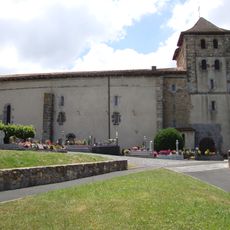
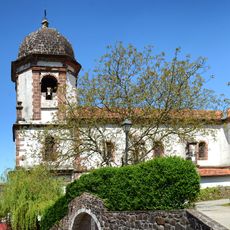
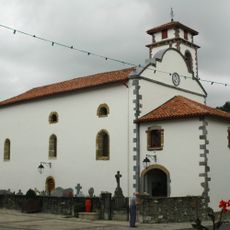
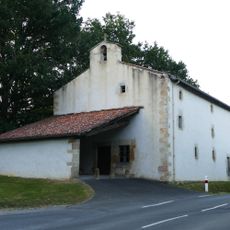
Notre-Dame-de-l'Assomption is a single-nave church measuring 36 metres long and 13 metres wide, ending in a Romanesque cul-de-four apse. Its walls are pierced with arrow slits, and a 17th-century square porch tower rises four storeys to an octagonal slate spire added in 1823. The rough brown and tan stone body has small grilled windows and a metal cross on the roofline.
The church was built in the 13th century by Premonstratensian canons, who structured the region into parishes from the late 12th century along the Compostela route. It was remodelled in the 16th century and again in 1611–1636 when the canons rebuilt their abbey. In 1794 it became a fodder store and the villagers were rounded up; worship resumed after the 1801 Concordat.
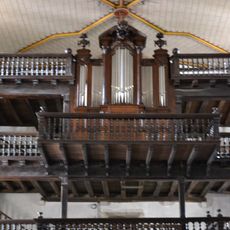
The two tiers of wooden galleries date from 1649 and were reserved for men until the 1970s, when women also began using them. The gilded retable behind the altar sets statues in niches painted blue, with red-painted decoration on the woodwork, and the ceiling above is covered in wooden coffers.
The church stands in the centre of Ainhoa, on the route of the pilgrimage to Santiago de Compostela, and is open daily for visits and services. The interior is organised on two levels: two tiers of wooden galleries, dated 1649, run along the walls and are reached by stairs. The building was restored from 2001 with support from the state and the departmental council.
The four-story porch tower dating from the 17th century served dual purposes as both an entrance and a defensive stronghold to protect villagers during armed conflicts. This combination reflects how security concerns shaped the building's design.
The community of curious travelers
AroundUs brings together thousands of curated places, local tips, and hidden gems, enriched daily by 92,946 contributors worldwide.