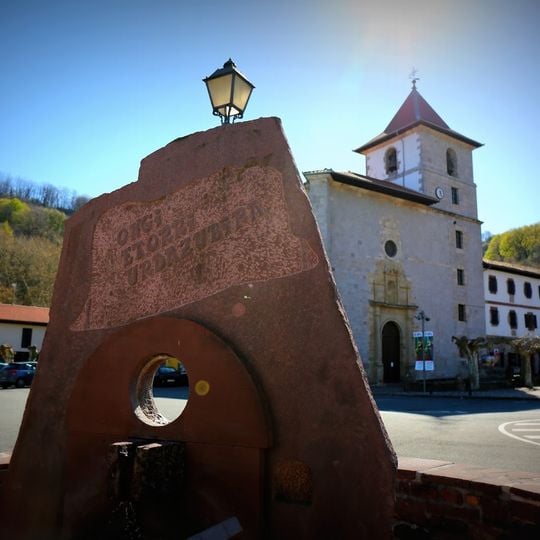
Monasterio de Urdax, antiguo cenobio premonstratense en Urdax (Navarra, España)
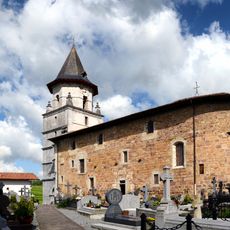
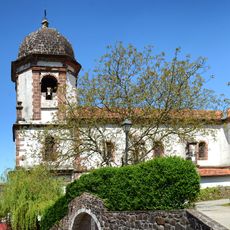
The Monasterio de Urdax is a monastery in Urdazubi, Navarre, built with stone from the Baztán valley in a characteristic pink color. The complex includes a church with a Latin cross plan and star vaults, a 17th-century cloister, and a museum with contemporary paintings and sculptures on display.
The monastery was likely founded in the 11th century by Augustinian monks and initially served as a hospital for pilgrims. It joined the Premonstratensian order in the early 13th century, and most existing structures were built between the 16th and 18th centuries.
The monastery reflects the role of the Premonstratensian order in the region, where monks lived in a strict community focused on prayer and manual work. The simple design of the buildings and the cloister show how daily life was organized around discipline and contemplation.
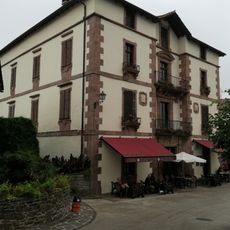
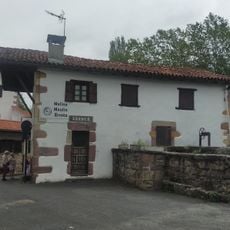
The monastery stands 2 km from the Spanish-French border on the N-121-B road, near the Dancharinea pass, beside the old Camino de Baztán pilgrimage route. The church and the remains of the cloister, now converted into village dwellings, are what survive; the museum above the cloister shows the history of Urdax and its link to the Camino de Santiago. The cloister arcades, by the stonemason Martín de Zubieta, date from the early 17th century.
The monastery suffered two major fires: one in 1526 when Navarre lost its independence, and another in 1793 during the French invasion, which destroyed a library containing over 9000 books. The monks took refuge at the sanctuary of Loyola and returned only in 1806.
The community of curious travelers
AroundUs brings together thousands of curated places, local tips, and hidden gems, enriched daily by 95,042 contributors worldwide.