Passy Reservoir, water reservoir in Paris, France
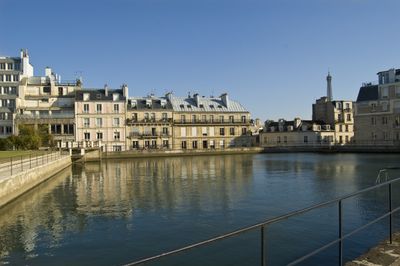
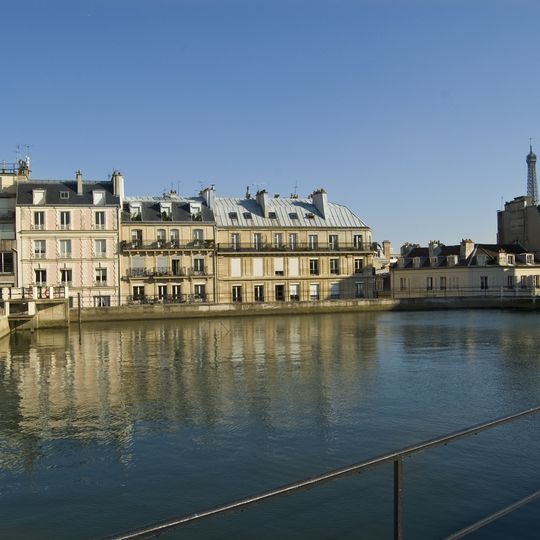
Passy Reservoir is a group of water tanks on the heights of the Chaillot hill in the 16th arrondissement, between rue Copernic, rue Lauriston, rue Paul-Valéry and rue Georges-Ville. Built from 1858 to 1866, it began as two open-air basins, joined in 1898 by a third basin and three underground basins holding 56,000 m3 of non-drinking water. Two unused basins, Villejust and the fire reserve, were later entered in the "Réinventer Paris" competition.
Construction began in 1858 and the reservoir opened in 1866 as part of Paris's modernized water system. A third basin and underground tanks were added in 1898 to meet growing demands for water across the city.
The reservoirs are closed to the public, so the name survives mainly in the streets around them: rue Copernic, rue Lauriston, rue Paul-Valéry and rue Georges-Ville. The water they store is still used for the Bois de Boulogne and Bois de Vincennes cascades, Paris parks and street cleaning.
The reservoirs are enclosed and not open to visitors; they can only be seen from outside, along rue Copernic, rue Lauriston, rue Paul-Valéry and rue Georges-Ville. The site lies on the Chaillot hill, 55 m above the level of the Seine, and the water is non-potable, supplying the Bois de Boulogne and Bois de Vincennes cascades, Paris parks and street cleaning.
The reservoirs stand 55 metres above the Seine, not 35, on the slopes of the Chaillot hill. Two of the four basins, unused since the late 2010s, were entered in the "Réinventer Paris" competition; the winning project, "le chai subaquatique" by Winereef, was to convert the vaulted Villejust basin, whose vaults reach 6 metres high.
The community of curious travelers
AroundUs brings together thousands of curated places, local tips, and hidden gems, enriched daily by 93,173 contributors worldwide.