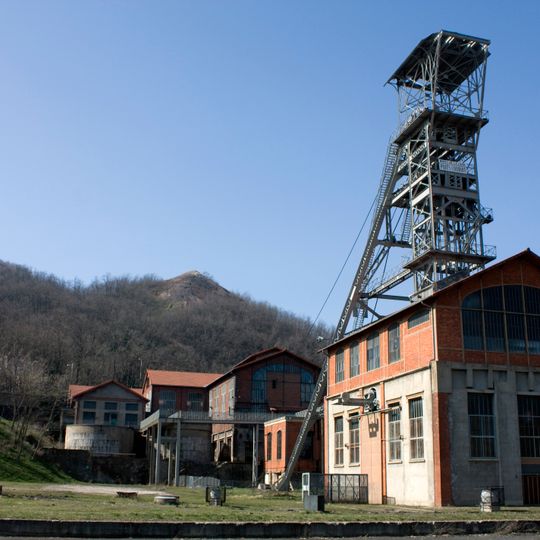
Saint-Étienne Mine Museum, Mining heritage museum in Saint-Étienne, France
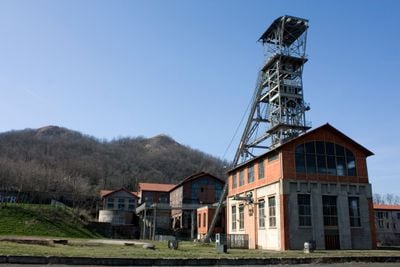
The Saint-Étienne Mine Museum occupies the buildings of the Couriot pit, the city's last coal mine, closed in 1973. A steel lattice headframe marked "CABESTAN" stands beside a red-brick building with large multi-paned windows. The site is organised on platforms cut into former quarries, with the 1948 grand lavabo and lamp room among the preserved structures.
Coal was mined at Beaubrun since the 18th century, where an anticline brought three shallow seams to the surface; old quarries also supplied sandstone for underground works until the 1930s. Around 1840 a railway branch to Montrambert spurred extraction, and the Couriot pit became the largest in the basin until the 1930s, then the western sector headquarters after the 1946 nationalisation. The last pit closed in 1973 and the museum opened in 1991.
The museum's name Couriot comes from the pit itself, and its collections include a reproduction of Jean-Paul Laurens's painting "Mineurs" and Armand Bloch's sculpture "Le Mineur". The site hosts performing arts, film screenings and festivals, and holds the Musée de France label.
The site is organised on terraced platforms cut into former quarries, so the route between the hoist room, lamp room and washrooms involves slopes and stairs. The reconstructed gallery and the 1948 grand lavabo are separate stops, and the three permanent exhibitions opened in December 2014 occupy their own halls. Allow several hours to cover the buildings and displays.
The Couriot pit covers 15 hectares, or 30 with the slag heaps, not several hundred. Its headframe carries the word "CABESTAN" on the steel lattice, a detail visible from the red-brick building beside it. The site keeps the best-preserved set of surface buildings in the Stéphanois coalfield.
The community of curious travelers
AroundUs brings together thousands of curated places, local tips, and hidden gems, enriched daily by 93,162 contributors worldwide.