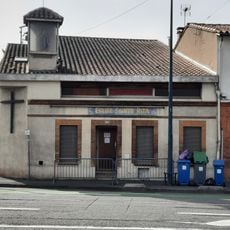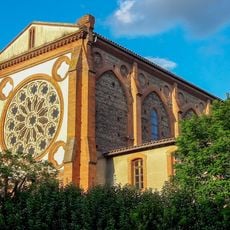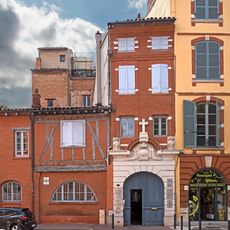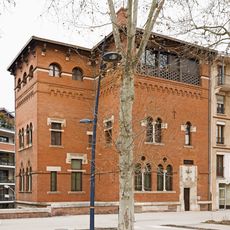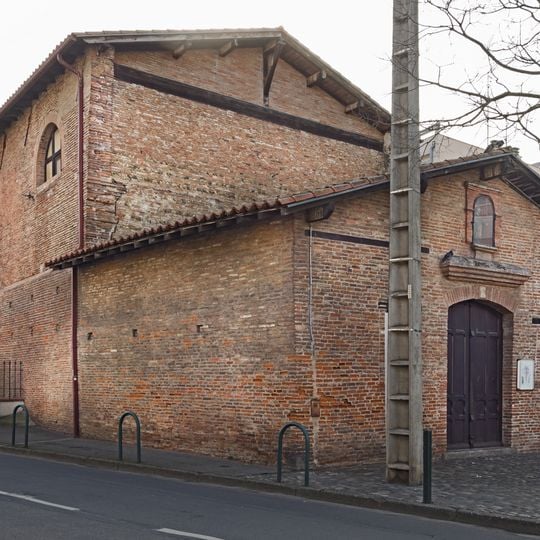
Chapelle Saint-Roch-du-Férétra, Medieval chapel in Saint-Michel district, Toulouse, France.
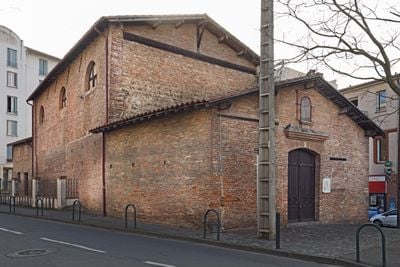
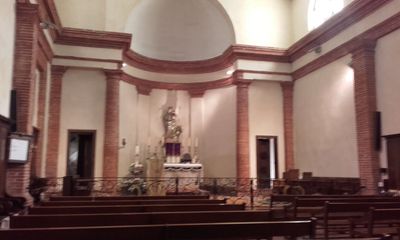
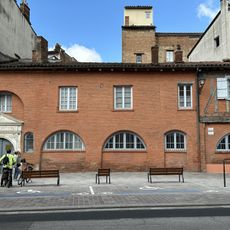
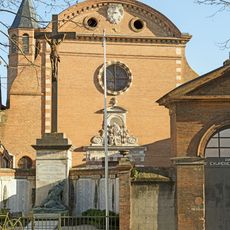
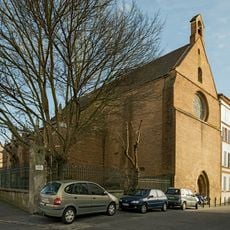
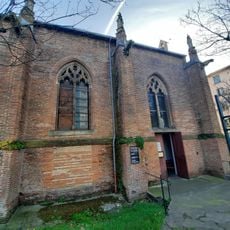
Chapelle Saint-Roch-du-Férétra has a rectangular nave ending in a semicircular apse, its walls resting on the 13th-century building and on remains of the Roman temple of Jupiter Feretrius. The exterior shows a taller gabled brick section with a round-arched window and a lower section with a dark arched double door. Inside, Jean-Arnaud Raymond's 1784–1786 refit left bare white-rendered walls with engaged Tuscan columns and pilasters under a red-brick cornice.
The chapel's name comes from a Roman temple of Jupiter Feretrius, over which early Christians built a first chapel. The present building dates to the 13th century and the arrival of the Carmelites in Toulouse. In 1369 it received the relics of Thomas Aquinas, entrusted by Pope Urban V. In 1795 the bell tower was destroyed during the Revolution, and the building was later rented by the Toulouse hospices as a coal store.
The name Férétra comes from an Occitan word for the Lent and Easter indulgence festival held after pilgrims visited the medieval leper hospital the chapel served. A confraternity dedicated to Saint Roch existed here by 1527; in 1554 its bailes commissioned a retable from the joiner Pierre Causié.
The chapel sits on Rue du Férétra in the Saint-Michel district, roughly ten minutes walk from central Toulouse. As an active place of worship, it is best to check ahead before visiting to understand when you can visit freely.
The chapel walls contain stones from a Roman temple dedicated to Jupiter Feretrius, which gave the location its name. This transition from pagan worship to Christian use is quite literally built into the building's structure.
The community of curious travelers
AroundUs brings together thousands of curated places, local tips, and hidden gems, enriched daily by 92,974 contributors worldwide.