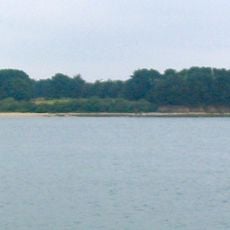
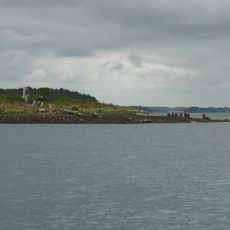
Pen Castel tide mill, Heritage tide mill in Arzon, France.
Pen Castel tide mill is a rectangular granite building of about 16 by 7 metres, with dressed stone at its base and corners and slate roofs on two pitches, each with a dormer. It stands at the end of a 120-metre dyke, 8 to 12 metres wide, that closes the 13-hectare étang and carries the RD198 road and the GR 34 path. A lean-to of about 13 by 5 metres extends the north-east facade under a single-pitch slate roof.
A mill is documented at this spot before 1186, possibly founded by a local lord, the Duke of Brittany or the Templars. Around 1250 it passed to the dukes, and in 1380 John IV traded it to the monks of Saint-Gildas de Rhuys for their mill des Lices in Vannes. The monks rebuilt it in the 17th century; after the Revolution it was sold as national property on 20 July 1796 to Vannes merchant Jacques Casset-Vertville. Milling continued until 1921, and the site was classed a natural site on 6 November 1933.
The structure shows how people once used tidal forces to mill grain and sustain their community. The building reflects how closely local residents lived with the sea and its natural cycles.
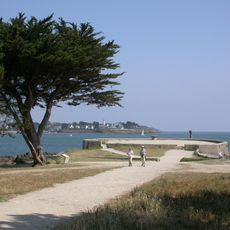
The site is accessible from the mainland via a walking path that runs along the coast, offering different views depending on tidal conditions. Pay attention to tidal cycles, as the surrounding area is affected by water levels throughout the day.
The mill stands at the end of a 120-metre dyke, 8 to 12 metres wide, that closes the 13-hectare tidal pond and now carries the RD198 road and the GR 34 coastal path. A second door on the sea side, flanked by two windows, was used to load and unload ships. Three chimneys are built into the sea facade.
The community of curious travelers
AroundUs brings together thousands of curated places, local tips, and hidden gems, enriched daily by 94,137 contributors worldwide.