Statue de Notre-Dame de Kerdro, Granite sculpture in Locmariaquer, France.
Notre-Dame de Kerdro is a 2.70 m granite Virgin and Child by Jules-Charles Le Bozec, erected in 1962 at the tip of Kerpenhir in Locmariaquer. The standing Virgin holds the child on her left shoulder; his haloed head rises above hers. The sculpture tops a 3 m truncated-cone pedestal built directly on the rocks.
A first plaster statue was put up in 1883 on the ramparts of Fort de Kerpenhir. The German occupiers demolished the fort between 1940 and 1944 to build a blockhouse, and the statue went with it. Locmariaquer then commissioned Jules-Charles Le Bozec, who carved the granite Virgin and Child in 1946, using a model made for the Breton pavilion of the 1937 Paris World's Fair. The work stood in the Notre-Dame church from 1947 and was moved to the point in 1962, inaugurated in the presence of Mgr Le Bellec, bishop of Vannes.
The name Kerdro means "good return" in Breton, recalling the legend of the Virgin appearing to a fishing boat at the gulf's mouth and signalling it to turn back; the crew reached port and escaped a storm that sank other vessels. A first plaster statue was placed on the ramparts of Fort de Kerpenhir in 1883 to commemorate the story.
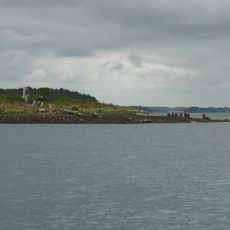
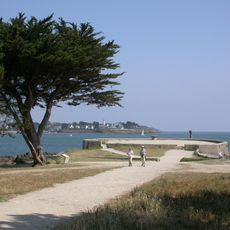
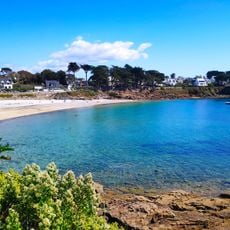
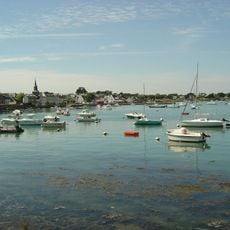
The statue stands on the rocks at the tip of Pointe de Kerpenhir, at the western mouth of the Gulf of Morbihan, reached by road from Locmariaquer. The ground around the base is uneven rock, so wear firm shoes. The point is exposed to wind, spray and tides; check the weather before walking out to the tip.
After its completion, the sculpture remained stored in the local church for 16 years before being moved to its current coastal location in 1962. This lengthy storage period makes it a notable example of post-war restoration of local monuments.
The community of curious travelers
AroundUs brings together thousands of curated places, local tips, and hidden gems, enriched daily by 94,118 contributors worldwide.