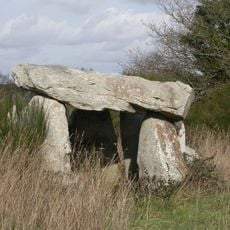
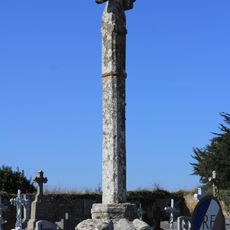
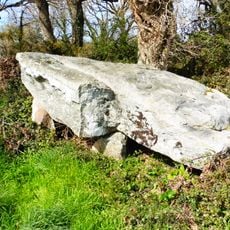
Tumulus d'Er Grah, Neolithic burial mound in Locmariaquer, France
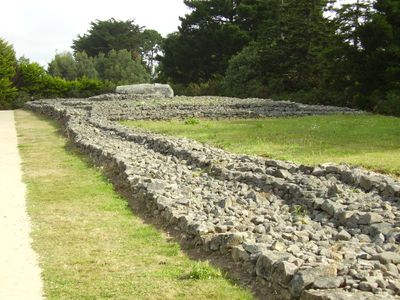
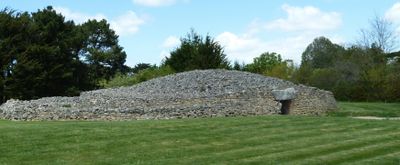
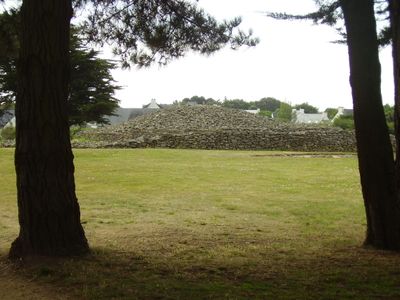
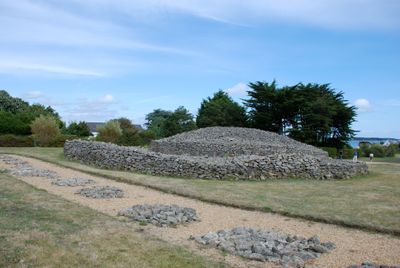
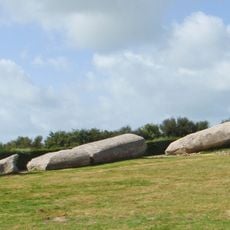
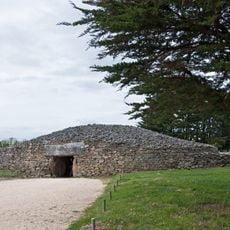
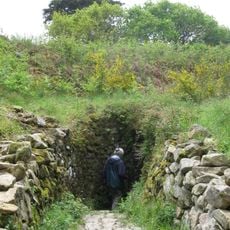
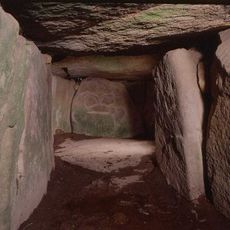
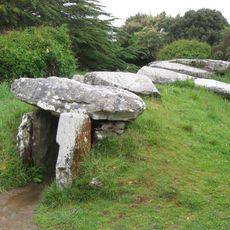
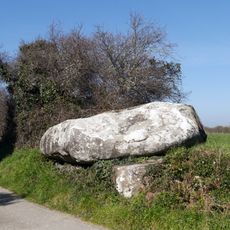
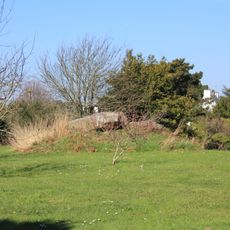
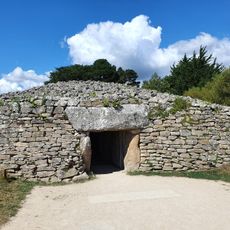
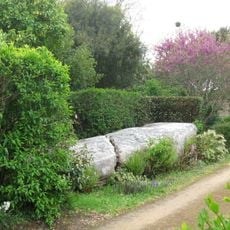
The Er Grah tumulus is a Neolithic burial mound stretching roughly 140 meters in length, combining stones and earth in a trapezoidal structure. It features layered stone construction with internal chambers and sits near the Gulf of Morbihan in the Breton landscape.
The monument was built during the late Neolithic period and underwent multiple expansions across different construction phases between roughly 4500 and 4000 BCE. Archaeological investigation beginning in 1908 revealed its original purpose as a burial site and how it evolved spatially over many generations.
The Breton name Er Vinglé, meaning "the quarry", comes from the parcel where the tumulus's north end was mined for stone around 1933. The site also yielded a complete Castellic-culture vase and ten variscite beads scattered deliberately across several square metres of ground.
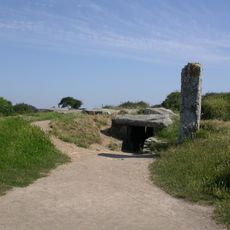
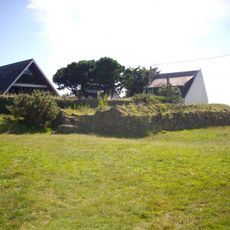
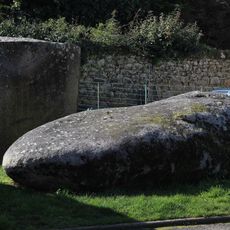
The mound lies on the Locmariaquer megalith site, beside the broken Grand menhir and the Table des Marchand, all reachable on foot. Its south end was levelled for a car park in 1971, so the monument is approached from the parking area. The visible form dates from the 1992 restoration; the long low mound is best read from the grassy field in front of it.
In one pit, two large domesticated cattle, still close to aurochs, were buried in the third quarter of the fifth millennium BCE after being skinned and partly defleshed; a flint arrowhead was found lodged between the ribs of one. Ten variscite beads were also scattered deliberately over several square metres of ground, outside any burial structure.
The community of curious travelers
AroundUs brings together thousands of curated places, local tips, and hidden gems, enriched daily by 94,138 contributors worldwide.