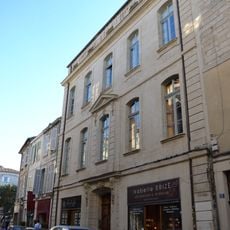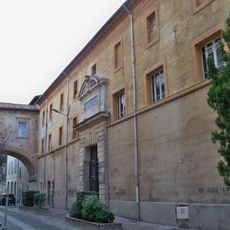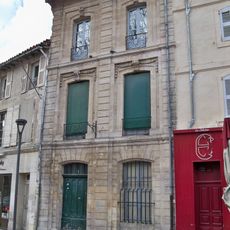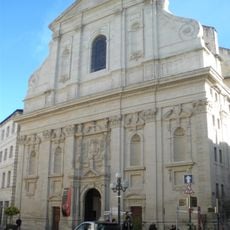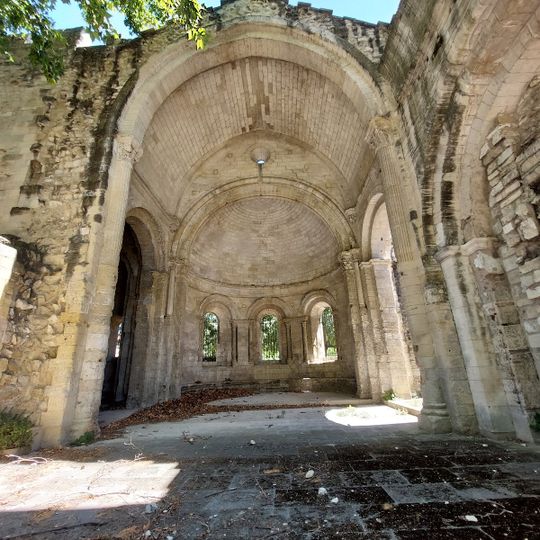
Abbatiale de l'abbaye des Célestins, dite de Saint-Ruf d'Avignon, Abbey church in Avignon, France
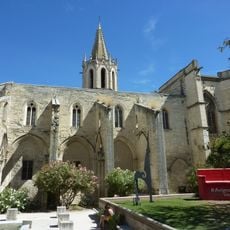
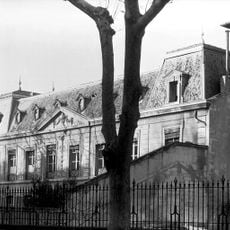
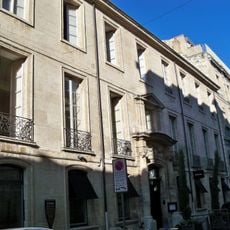
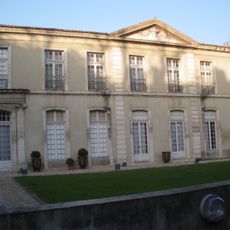
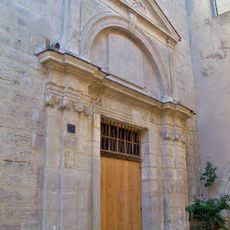
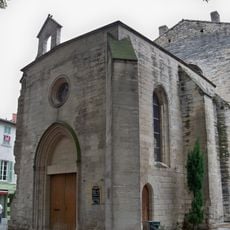
The church of the Célestin abbey in Avignon, known as Saint-Ruf, stands on Boulevard Gambetta. Its nave is covered by a pointed Gothic vault, while the chevet ends in a polygonal apse lit by tall windows separated by buttresses. A tower with twin-arched openings rises beside the building, and the masonry shows the church was reworked after the Middle Ages.
The founding by canons of the Saint Ruf order in the 11th century marked the beginning of a major religious community in the region. By the 12th century, the abbey had become a center for church reform that influenced other religious communities.
The church keeps the name Saint-Ruf from the canons of the Saint-Ruf order who settled here, and the Célestins who took over in the 14th century. Look for the twin-arched openings of the tower and the polygonal apse, Romanesque work reworked in later campaigns. The building now serves as a parish and cultural venue alongside its religious use.
The church stands on Boulevard Gambetta, a short walk east of the Place de l'Horloge and the papal palace. It is an active parish, so visits are best timed outside Mass; the entrance is on the street side, and the interior is entered at ground level.
The Englishman Nicholas Breakspear, the future Pope Adrian IV, is linked to Saint-Ruf: he served as a canon of the order before his election in 1154. He is the only English pope in history. The abbey church on Boulevard Gambetta preserves the memory of this community, which trained him.
The community of curious travelers
AroundUs brings together thousands of curated places, local tips, and hidden gems, enriched daily by 94,280 contributors worldwide.