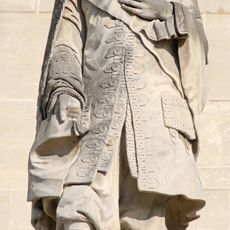
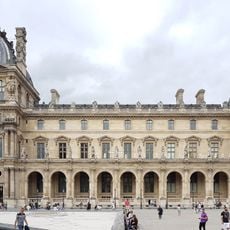
Napoléon en triomphateur, Statue in the Louvre Museum, Paris, France.
Napoléon en triomphateur is a lead statue by François-Frédéric Lemot, dated 1808, showing Napoleon I from the thighs up. He wears a draped robe with small floral motifs over a short-sleeved tunic, and a collar of linked rectangular plaques ending in a star-shaped pendant. His raised right hand holds a long, thin staff; his left grips a bundled cloth or sheath.
Created by François-Frédéric Lemot in 1808, this sculpture was originally commissioned for the Arc de Triomphe du Carrousel but was removed by Napoleon's order in August 1808 shortly after installation.
The work exemplifies neoclassical sculptural style of the early 19th century, incorporating Roman imperial symbolism including laurel wreaths, ceremonial robes, and military regalia to glorify Napoleon's reign.
Currently displayed in Room 105 of the Louvre's Richelieu wing within the French sculpture department, accessible during regular museum hours with standard admission tickets.
Napoleon personally rejected this representation of himself, making it one of the few imperial artworks that the emperor refused to display publicly during his lifetime.
The community of curious travelers
AroundUs brings together thousands of curated places, local tips, and hidden gems, enriched daily by 92,963 contributors worldwide.