Grotte de Fontanet, Prehistoric cave in Ornolac-Ussat-les-Bains, France.
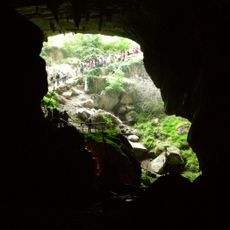
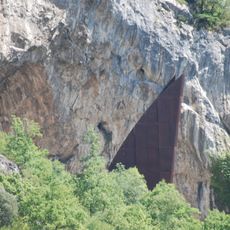
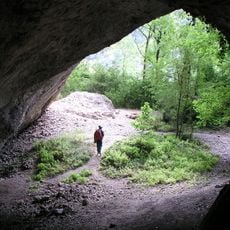
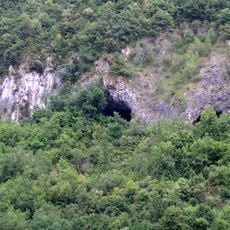
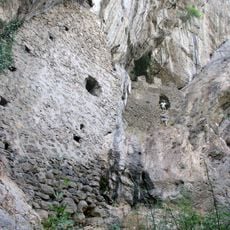
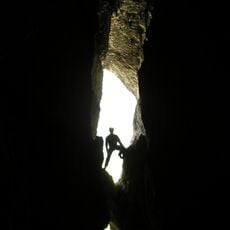
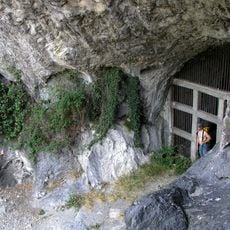
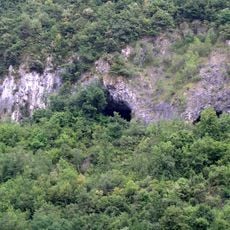
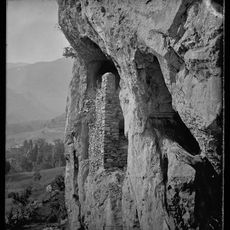
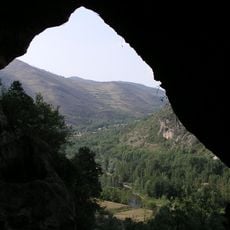
The Grotte de Fontanet is an ornamented cave on the slope of the Quié de Lujat, in the high Ariège valley above Ornolac-Ussat-les-Bains. Its decorated gallery, found in 1972, lies beside the main network explored since the 19th century. The south slope below the cliff is covered with Lias limestone and Jurassic dolomite scree, while the escarpment itself is Urgonian limestone with visible strata.
Archaeological findings reveal that people lived here during the Magdalenian period, roughly 12,000 to 14,000 years ago. Research shows the cave served as a shelter and camp for hunting groups in the region.
The decorated gallery, found by Luc Wahl on 6 February 1972, holds hand and foot prints in clay, drawings, engravings and wall paintings attributed to the Middle or Upper Magdalenian. In 1988 the musicologist Iégor Reznikoff and the prehistorian Michel Dauvois ran an archaeoacoustic study here, alongside the grotte du Portel and the grotte de Niaux.
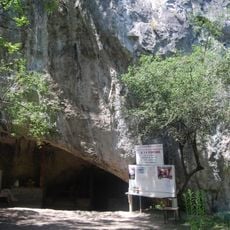
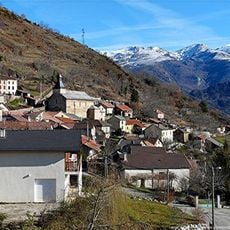
The cave is closed to the public, so no guided tours are offered; the decorated gallery found by Luc Wahl in 1972 cannot be visited. The entrance lies on a slope above the Ariège, southeast of the hamlet of Barry-d'en-Bas, in the protected Quié de Lujat area. The opposite bank holds the grotte de Sainte-Eulalie and the spoulga des églises at Bouan.
The cave floor preserves human footprints from people who walked there thousands of years ago, looking almost as fresh as yesterday. These direct traces show exactly how inhabitants moved through the cave and spent their time inside.
The community of curious travelers
AroundUs brings together thousands of curated places, local tips, and hidden gems, enriched daily by 94,316 contributors worldwide.