Cave of Niaux, Prehistoric art cave in Ariège, France
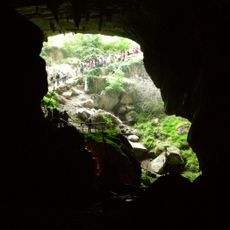
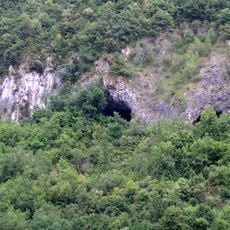
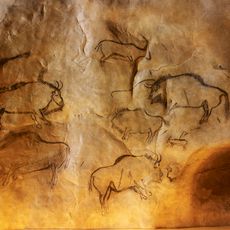
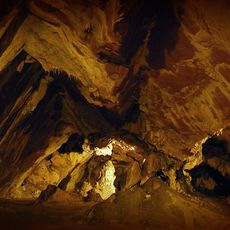
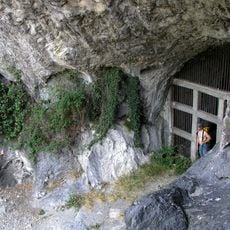
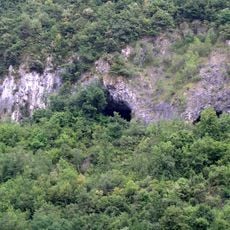
The Cave of Niaux is a decorated cave in the Vicdessos valley, Ariège, with passages developed in Jurassic and Cretaceous limestone. Its best-known chamber, the Salon Noir, lies more than 700 m from the presumed prehistoric entrance and holds black and red figures of bison, horses and ibex. The cave floor is left in its natural state, wet and uneven in places.
Félix Garrigou visited the cave in 1864 and was shown some of the paintings. In 1869 Commander Molard and his sons discovered the Salon Noir gallery and published a plan, drawing specialists' attention; Henri Breuil and Émile Cartailhac investigated a year later. The cave was classified as a monument historique on 13 July 1911, and prehistoric occupation has been studied since 1906.
The cave was not a dwelling: no domestic remains were found, and the Salon Noir lies over 700 m from the presumed prehistoric entrance. Human footprints survive in about ten areas, and their size shows that children entered the cave. The animals seem to float on the walls, following the rock's contours.
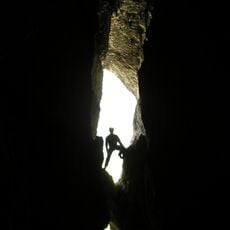
The cave floor is left in its natural state: wet, very uneven and slippery in places, so sturdy walking shoes are essential. The walk to the paintings passes through large chambers and narrow passages, and the temperature stays just below 16°C, feeling colder because of the damp. Bring a torch and leave food and drinks behind.
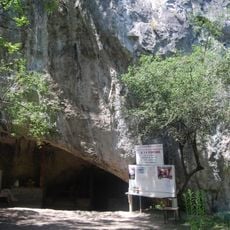
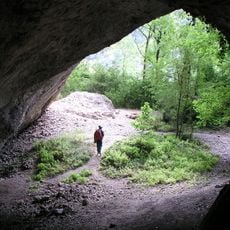
The Salon Noir lies more than 700 m from the presumed prehistoric entrance, and no paintings have been found near the cave mouth. Human footprints survive in about ten areas of the floor, and their size shows that children entered the cave. The separate Réseau Clastres, found in 1970, holds a rare charcoal sketch of a weasel.
The community of curious travelers
AroundUs brings together thousands of curated places, local tips, and hidden gems, enriched daily by 94,755 contributors worldwide.