Grotte des Eglises, Prehistoric cave in Ussat, France
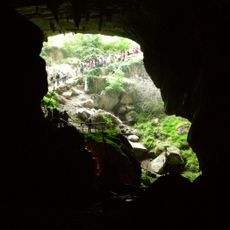
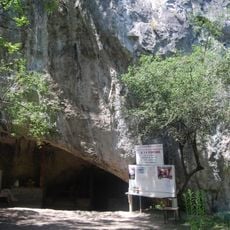
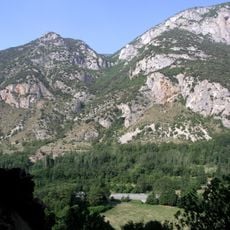
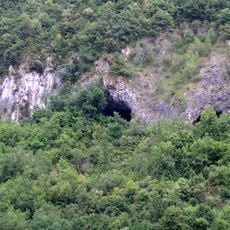
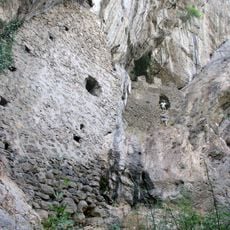
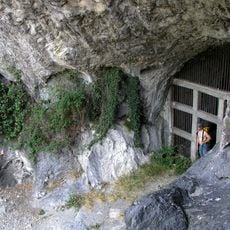
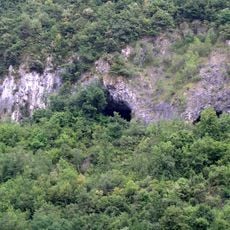
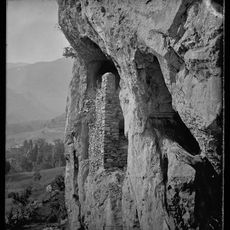
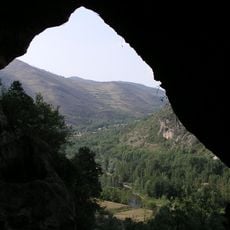
Grotte des Églises is a cave complex in the Ariège valley at Ussat, whose largest part, Les Églises Inférieures, covers 46,500 m² and has three entrances, the north one fortified as a spoulga. Its horizontal entrance fissure, about 1 m high and 5 m long, opens northwest onto a gravel floor sloping gently down some twenty metres to a first, nearly dry hall with a high ceiling. The galleries lie in Lower Cretaceous limestone and hold almost no concretions; a metal door closes the painted gallery.
The cave was occupied at the end of the Palaeolithic, during the Middle Bronze Age and again in the 13th or 14th century. It was excavated by Félix Garrigou in the 19th century, then by Jean Clottes from 1964 to 1977. The decorated gallery was discovered in 1921, and the latest dating places its occupation in the final Magdalenian, around 12,900 years ago.
The name "Églises" (churches) is said to come from the cave's use as a refuge by Cathars fleeing persecution in the 13th or 14th century. The decorated gallery, with ochre paintings and engravings of horses and ibex, is closed to visitors behind a metal door.
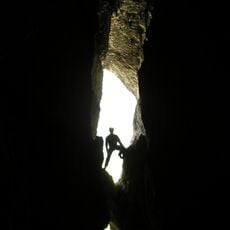
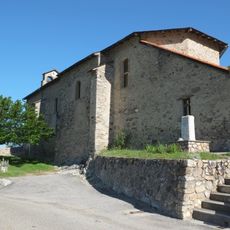
From the dead end of impasse Pradinas in Ussat, the path to the cave starts to the right of the calvary and takes about 10 minutes on foot. The entrance is a horizontal fissure about 1 m high and 5 m long facing north-west; the gravel floor slopes gently down for some 20 m to the first, nearly dry chamber. The painted gallery is closed to visitors behind a metal door.
The decorated gallery, holding ochre paintings of horses and ibex and engravings, was discovered in 1921 and is sealed behind an iron door. It was excavated by Félix Garrigou in the 19th century, then by Jean Clottes from 1964 to 1977. The cave also sheltered intensive butchery activity.
The community of curious travelers
AroundUs brings together thousands of curated places, local tips, and hidden gems, enriched daily by 92,880 contributors worldwide.