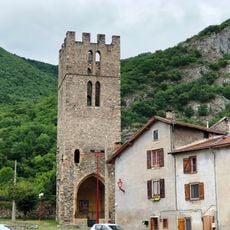
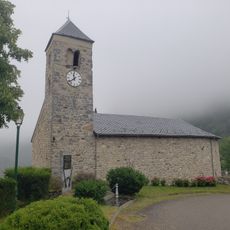
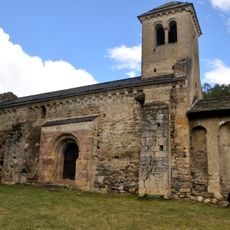
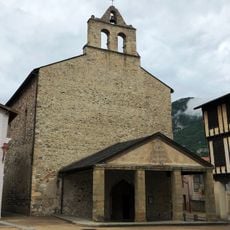
Notre-Dame de Sabart, Medieval chapel in Tarascon-sur-Ariège, France
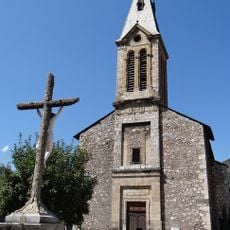
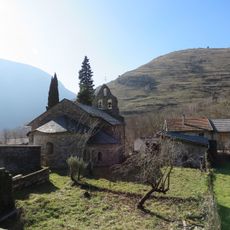
Notre-Dame de Sabart is a chapel south of Tarascon-sur-Ariège whose basilical plan of three naves separated by heavy square pillars has survived intact. Barrel vaults rest on transverse arches carried by pilasters, and the chevet has three old apses of rough rubble masonry. The west facade, rebuilt in the 19th century, has a pointed-arch portal and a square bell tower with five arched openings.
A legend credits Charlemagne with founding the chapel in 778 after a victory over the Saracens. A chapel existed by the 9th century, when Sabart became the seat of a viguerie, the Sabarthès. In 1175 it became the first commandery of the Order of Saint John of Jerusalem. The present building was enlarged in the 16th century from a Romanesque predecessor, devastated in 1568, and restored from 1637 onward.
The chapel draws pilgrims each September 8th for the feast of the Virgin Mary's nativity, a religious tradition that has shaped how locals connect with this place. This ongoing observance shows how the building remains woven into the spiritual life of the region today.
The chapel is undergoing restoration work to improve roof waterproofing and preserve the masonry. Visitors should check conditions before arriving, as access may be limited during conservation efforts.
The chapel's name comes from the Occitan "Sabart", derived from the Gaulish *savartos, meaning uncultivated or fallow land, later Latinised as savarda. The same root survives in several Ariège place names, including Eycheil and Esplas-de-Sérou, where it describes hard, clayey soil unfit for farming.
The community of curious travelers
AroundUs brings together thousands of curated places, local tips, and hidden gems, enriched daily by 95,283 contributors worldwide.