Crispine Cave, Archaeological cave in Marseille, France.
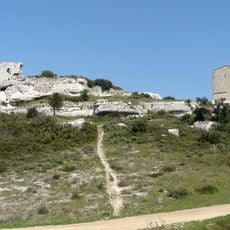
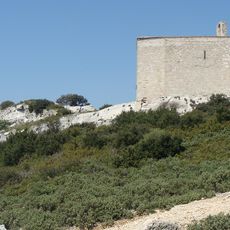
Crispine Cave is a Neolithic burial cave in the Nerthe range, 16th arrondissement of Marseille, on the heights above the port of Corbières, northeast of Cap Ragnon. Its ogival entrance, partly closed by a wall pierced with a door from its time as a sheepfold, opens into a chamber 17.50 m long and 10 m wide at about 150 m altitude, overlooking the tunnel linking Marseille to the Rhône.
The cave was discovered by chance in 1910 and quickly attracted the attention of researchers. Since then, excavations have uncovered evidence of human settlement dating back to the Neolithic period in this region.
Stanislas Clastrier suggested the name derives from Christ-Pinis, "cave of Christ in the pines", recalling refractory priests such as Père Reymonet who, according to Abbé Ollivier, held clandestine masses in the Estaque range caves during the Terror of 1793. The cave later served as a sheepfold, and a wall pierced by a door partly closes its ogival entrance.
The cave lies on the fenced grounds of a former chemical plant (150 hectares, opened by Rio Tinto in 1883, closed by Métal Europe in 2001), where decontamination ordered by prefectoral decree in 1998 is still unfinished, so access is not permitted. The entrance, partly closed by a sheepfold wall pierced with a door, opens northeast of Cap Ragnon above the Corbières port, at about 150 m altitude, almost over the Marseille–Rhône tunnel mouth.
The cave lies on the 150-hectare grounds of a chemical plant founded by Rio Tinto in 1883 and shut down by Métal Europe in 2001; a 1998 prefectoral order required its decontamination, still unfinished, which is why the cave stays off-limits. It also served as a rubbish dump for years.
The community of curious travelers
AroundUs brings together thousands of curated places, local tips, and hidden gems, enriched daily by 93,822 contributors worldwide.