Abuli fortress, Bronze Age fortress in Samtskhe-Javakheti, Georgia
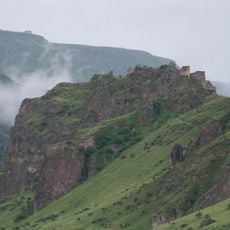
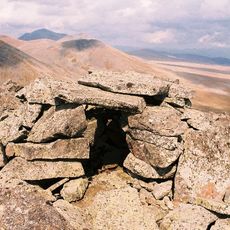
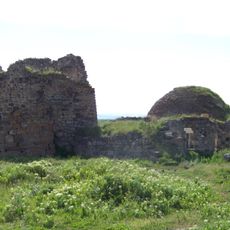
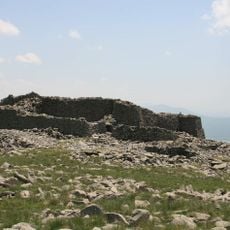
Abuli fortress sits on Mount Patara Abuli at about 2700 meters elevation and consists of massive basalt stones fitted together without mortar. The ring-shaped structure includes a central area and contained many rooms for different purposes such as storage and shelter.
No excavations have been carried out at Abuli, so its construction date is uncertain; it is attributed to the Middle to Late Bronze Age. It belongs to a group of cyclopean hillforts across the South Caucasus that mark emerging social hierarchies, with elites controlling arable land and resources. In 2019 Georgia's heritage authorities began a multiyear project to study and conserve megalithic complexes including Abuli, Shaori, Avranlo and Sameba.
The stonework reveals how people in this region lived and organized their daily lives thousands of years ago. Dry masonry without mortar was a common craft technique of the time, clearly visible throughout the ruins.
The path to the fortress climbs steeply over rocky terrain, so sturdy footwear is essential and visitors should allow time for the ascent. Weather at this elevation can change quickly, making warm clothing and proper preparation important.
Locals also call the fortress Korogli, from the Turkic Koroğlu. Its walls of volcanic basalt reach 5 m in height and 3 m in thickness, and the two gates open in the south and east walls. The citadel's western corners are square, its eastern corners rounded.
The community of curious travelers
AroundUs brings together thousands of curated places, local tips, and hidden gems, enriched daily by 94,160 contributors worldwide.