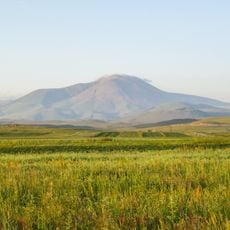
Mount Samsari, Volcanic summit in Samtskhe-Javakheti, Georgia.
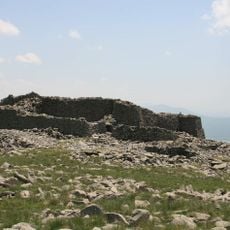
Mount Samsari is a 3,285-metre volcanic cone on the Abul-Samsari Range, on the border of Samtskhe–Javakheti and Kvemo Kartli. Its 3-kilometre-wide caldera, formed about 200,000 years ago along local fault systems, has a semicircular rim with glacial cirques. The caldera floor is covered with moraine debris, frost-weathered boulders and small lakes, and the slopes are largely bare of vegetation.
The mountain formed around 200,000 years ago from intense volcanic activity in the Lesser Caucasus region. The remaining structure still shows clear traces of this ancient period and shapes the landscape of southern Georgia.
Georgian geologists and researchers regularly study Mount Samsari to understand the volcanic centers and geological evolution of the Southern Georgian Highland region.
The mountain is accessible via established hiking trails that lead to the crater floor with its rocks and water features. Visitors should know that higher elevations have little vegetation and weather can change quickly in this area.
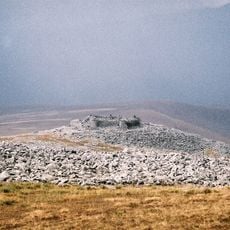
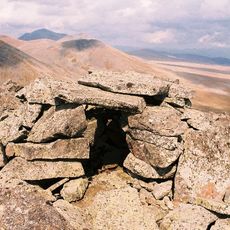
The caldera's floor is scattered with moraine material and frost-weathered boulders left by past glaciation, with small lakes lying between them. The rim still carries cirques cut by former ice, and the caldera itself formed about 200,000 years ago along local fault systems.
The community of curious travelers
AroundUs brings together thousands of curated places, local tips, and hidden gems, enriched daily by 94,094 contributors worldwide.