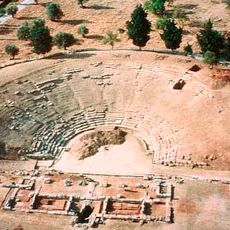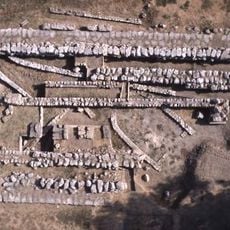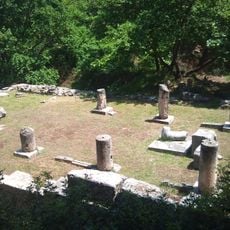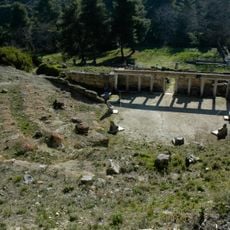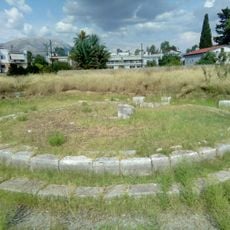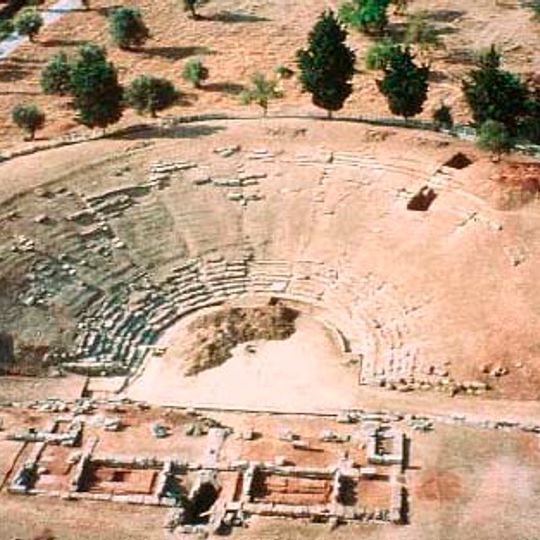
Ancient Greek theatre of Eretria, Greek theatre in Eretria, Greece.
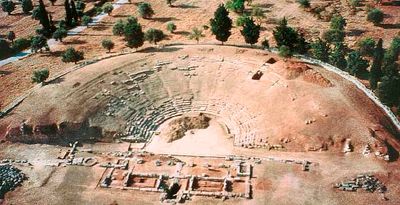
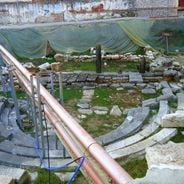
The Ancient Greek theatre of Eretria is an archaeological site featuring a circular orchestra and seating areas that brought spectators close to the stage action. The structure includes a sophisticated drainage system that managed rainwater and supported the longevity of the facility.
The theatre was built gradually during the 4th century BCE and underwent several phases of reconstruction and renewal. After destruction by Roman forces, the site was later restored and continued to be used.
The theatre served as a gathering place where the community experienced performances and shared public life together. It reflects how important music, drama, and communal events were to everyday life in ancient Greece.
The site is accessible year-round for visitors who want to explore on foot. Wearing comfortable shoes is helpful, since the ground is uneven and parts of the site remain partially exposed.
Unlike many other ancient theatres, this one was built on an artificial embankment rather than into a natural hillside. An underground passage connected the stage to the orchestra area and allowed actors to enter unseen by the audience.
Location: Eretria Municipality
GPS coordinates: 38.39861,23.79054
Latest update: December 6, 2025 17:47
Ancient Greek theaters demonstrate skilled architecture developed between the 5th and 3rd centuries BC. Built into hillsides, these structures utilized natural terrain to create stone seating and enhance acoustic performance. They served as venues for tragedies and comedies, as well as gathering spaces during religious festivals and panhellenic games. Most theaters are located in mainland Greece and on the islands, with notable examples such as Epidaurus in Argolis, renowned for its exceptional sound clarity, or the Theater of Dionysus in Athens, considered the cradle of Western theater where works by Aeschylus, Sophocles, and Euripides were performed. Additional sites are found across the eastern Mediterranean, including Miletus in present-day Turkey and Philippi in northern Greece. Some of these structures were modified during the Roman period, such as the Odeon of Herodes Atticus, which incorporated Roman architectural features while maintaining its function as a performance space. Many of these venues, which could seat between 5,000 and 18,000 spectators, remain important remnants of ancient Greek social and cultural life.
Aulis
17.7 km
Euripus Bridge
18.2 km
Amphiareion of Oropos
12.9 km
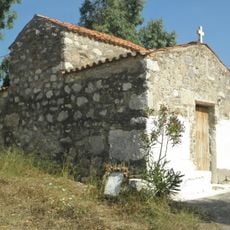
Church of Agia Paraskevi
18.7 km
Agios Georgios Monastery, Arma
5.3 km
Archaeological Museum of Eretria
292 m
Archaeological museum of Chalkida
18.6 km
Chalkida Synagogue
18.6 km
Temple of Apollo Daphnephoros
538 m
Temple of Amphiaraos
12.9 km
Church of Agioi Tessarakonta, Sykamino
12 km
Theatre of Amphiaraion
12.8 km
Church of Transfiguration, Vounoi
18.1 km
Castle of Fylla
10 km
Church of Saint Peter and Paul, Vounoi
18 km
Church of Metamorfosi Sotiros Amarynthou
10.5 km
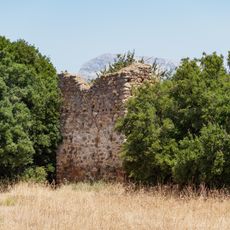
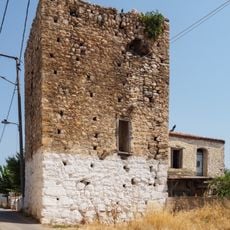
Tower of Pissonas
15.7 km
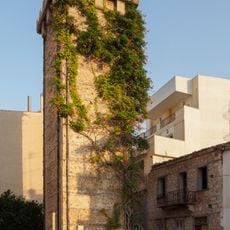
Tower of Amfithea
16.4 km
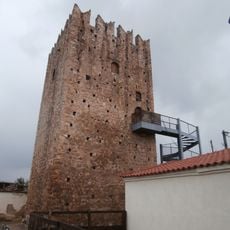
Tower of Sirina
18.4 km
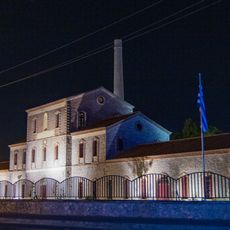
Arethousa Factory Building
17 km
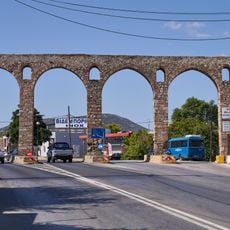
Ancient Ottoman aqueduct of Chalkida
17.1 km
Tower of Vasiliko
11.2 km
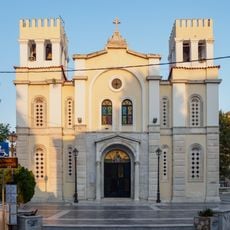
Cathedral church of Agios Dimitriou Chalkidas
18.4 km
1st primary school building, Eretria
873 m
Folklore Museum of Chalkis
18.5 km
Courthouse of Chalkida
18.7 km
Panagitsa Amarynthou
10.5 km
Tholos at Eretria
705 mVisited this place? Tap the stars to rate it and share your experience / photos with the community! Try now! You can cancel it anytime.
Discover hidden gems everywhere you go!
From secret cafés to breathtaking viewpoints, skip the crowded tourist spots and find places that match your style. Our app makes it easy with voice search, smart filtering, route optimization, and insider tips from travelers worldwide. Download now for the complete mobile experience.
A unique approach to discovering new places❞
— Le Figaro
All the places worth exploring❞
— France Info
A tailor-made excursion in just a few clicks❞
— 20 Minutes