Fort Bourguignon, Coastal fortification in Pula, Croatia.
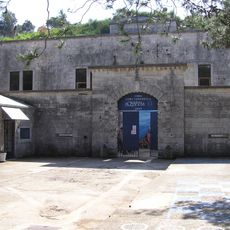
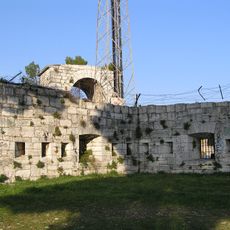
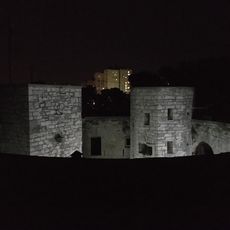
Fort Bourguignon, originally Fort Monsival, is a two-story circular fortress built from 1861 to 1866, with a small circular courtyard at its center. A vaulted hallway faces the yard on every floor, while 20 casemates form the outer shell. The lower floor has three rifle embrasures and the upper floor one cannon embrasure; massive oak beams once divided the floors in each casemate, and only a few remain.
Built as Fort Monsival from 1861 to 1866, it was named after Admiral Anton Bourguignon von Baumberg. It saw use in the Third Italian War of Independence in 1866, then served as an army shelter in World War I. Withdrawn from operational service in 1943, it later became a military store and barracks before being abandoned until 1967.
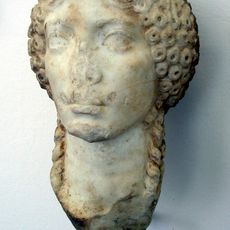
The fort is named after Austrian admiral Anton Bourguignon von Baumberg. In 1989 a group called Supercraft turned it into one of the two best-known rave party venues on the eastern Adriatic coast. A museum opened inside the fort in 2012.
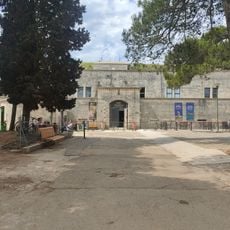
The fort stands on the Monsival hill above the harbor, reachable on foot from the Pula waterfront. A museum opened inside it in 2012, so the interior is no longer simply closed off. The moat was half filled with trash in the 1970s, and the drawbridge and two caponiers that once guarded the entrance are the features to look for on approach.
The iron roof was built to rotate a full 360 degrees, serving as a moving artillery platform; a Škoda observation cupola from around 1900 still stands on the upper platform. The entrance was shielded by a drawbridge over a moat and two caponiers.
The community of curious travelers
AroundUs brings together thousands of curated places, local tips, and hidden gems, enriched daily by 92,742 contributors worldwide.