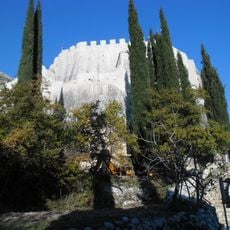
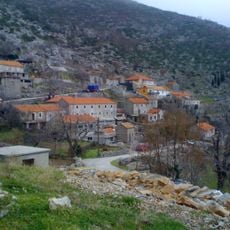
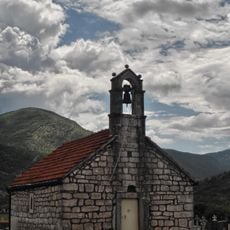
Sokol Fortress, Medieval fortress in Dunave, Croatia.
Sokol Fortress, also called Sokol grad or Sokol kula, stands in the village of Dunave in Konavle, below the eastern slopes of Sniježnica near the Montenegrin border. The medieval fort occupies a site inhabited since the Eneolithic and later used in Roman times as part of a Byzantine limes. Its grounds also hold a medieval stećak necropolis and a Glagolitic marble inscription.
The first written records of Sokol date to a 1373 mention and a 1391 donation of Konavle by the Sanković family to the Republic of Ragusa. It was held by a Dubrovnik garrison commanded by a noble until its abandonment in 1672. The 1667 earthquake did not destroy it, but after 1672 it was quarried by local residents for building stone.
The name Sokol means falcon. The site also holds a medieval stećak necropolis and a Glagolitic marble inscription, and archaeologists have surveyed it since the 1970s, identifying habitation by the Cetina culture.
The fortress is reached from the village of Dunave, under the eastern slopes of Sniježnica near the Montenegrin border. The Society of Friends of Dubrovnik Antiquities restored it in April 2013 and opened it to visitors with an entrance fee; 5,800 people visited in the first nine months of that year. Sturdy shoes help on the uneven stone remains.
Arthur J. Evans dug at Sokol but never published complete results; systematic surveys from the 1970s showed the site was settled in the Eneolithic, Bronze and Iron Ages, notably by the Cetina culture, and later formed part of a Byzantine limes. A medieval stećak necropolis and a Glagolitic marble inscription also lie on the site.
The community of curious travelers
AroundUs brings together thousands of curated places, local tips, and hidden gems, enriched daily by 93,619 contributors worldwide.