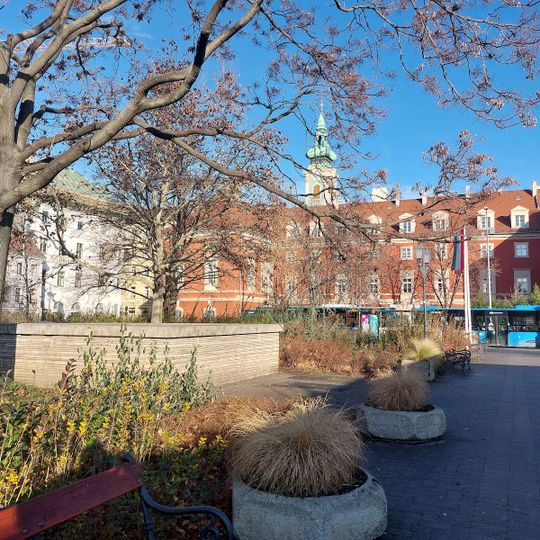
Batthyány Square, square in Budapest, Hungary
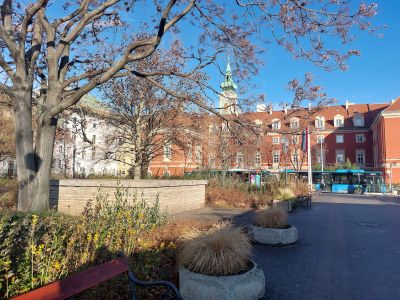
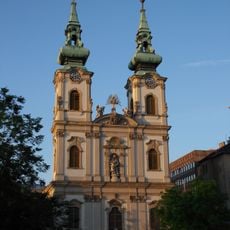
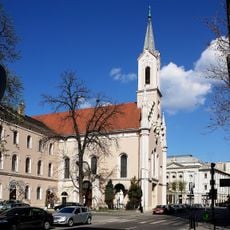
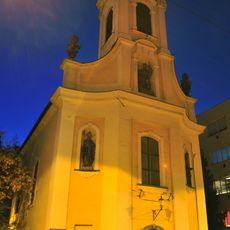
Batthyány Square is a paved square on the Buda bank of the Danube, roughly opposite the Parliament. Its north side is closed by the baroque Church of Saint Anne, built by the Jesuits in 1740–1761, and by the former Elizabethan convent. A glass pavilion in the middle leads down to the M2 metro and the HÉV terminus, and the market hall stands beside Fő utca.
The square was called Oberer Markt from 1695, then Bombenplatz from 1874 after cannonballs stored in its military guardhouse, and received the name Batthyány tér in 1905. Its level was raised in 1872 for flood protection, leaving older doorways a few steps below street level. A Kossuth Bridge head stood here from 1946 to 1960, marked today by a plaque.
The square's name honours Lajos Batthyány, executed in 1849; his statue was erected here in 2008. The market hall beside the square, finished in 1901, serves shoppers buying produce and Hungarian goods. The Szent Anna church, built by the Jesuits between 1740 and 1761, faces the square.
Batthyány tér is the terminus of the HÉV suburban line to Szentendre and sits on metro line M2, with tram and bus stops on the square itself. The M2 station is reached through a glass pavilion in the middle of the square. Because the ground was filled in 1872, several doorways of the older buildings stand a few steps below street level.
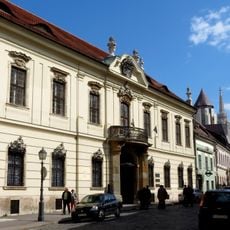
The Négy évszak ház (Four Seasons House) at number 3 was built by master builder Kristóf Hikisch, who bought the plot from the Jakosevics family in 1793 and lived there until his death in 1809. Above the ground-floor cornice, four reliefs of putti represent the seasons. Renovated in 1956 and again in 2008, its facade was then repainted white and pink instead of grey.
The community of curious travelers
AroundUs brings together thousands of curated places, local tips, and hidden gems, enriched daily by 92,648 contributors worldwide.